
News
Wed, 01/21/2026
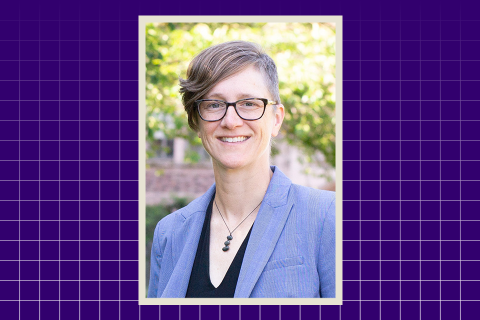
Professor Kate Starbird named ACM Fellow for advancing research on misinformation and information ecosystems
HCDE Professor Kate Starbird has been named an ACM Fellow, one of the highest honors in computing, for her groundbreaking research on misinformation and online information ecosystems. The honor recognizes her contributions to understanding and improving information ecosystems, including during crisis events and in addressing misinformation.
Mon, 01/12/2026
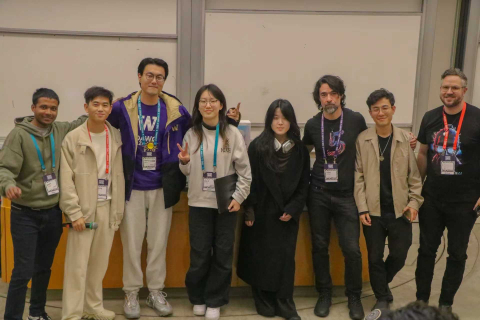
HCDE master’s student earns two awards at Stanford XR hackathon
HCDE master’s student William (Wang Silang) earned two awards at the Stanford XR Immerse the Bay Hackathon for a project exploring how immersive and Tangible User Interface (TUI) technologies can help people engage meaningfully and respectfully with memories of deceased loved ones.
Mon, 12/29/2025
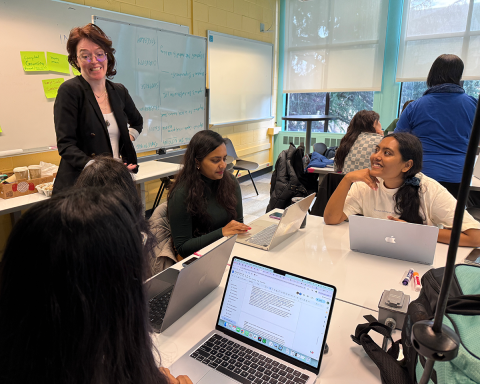
Students explore wearable technology in design jam for accessibility
In Autumn quarter, HCDE welcomed students for wearABLE Futures, a fast-paced design jam focused on the question: How might we make wearable technology more accessible to all humans? Industry mentors from Ipsos, Oura, Meta, Ralytics, and Microsoft’s Inclusive Tech Lab met with student teams, offering feedback and helping students connect their ideas to real-world feasibility and impact.
Wed, 12/17/2025
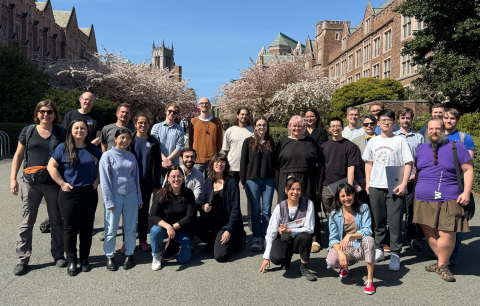
HCDE impact: Professor Nadya Peek on human-centered automation
HCDE Associate Professor Nadya Peek is designing open, human-centered automation tools that help scientists run more reproducible, creative, and accessible experiments. Working with collaborators across engineering, science, and fabrication, her research focuses on building flexible automation systems that can be adapted to different labs, workflows, and research questions.

Wed, 11/19/2025
HCDE recognizes Dr. Natasha N. Jones with Outstanding Alumni Award
The Department of Human Centered Design & Engineering is proud to recognize Natasha N. Jones (PhD ‘12), associate professor in Michigan State University’s Department of African American and African Studies, as the inaugural recipient of the HCDE Outstanding Alumni Award.
Tue, 11/18/2025
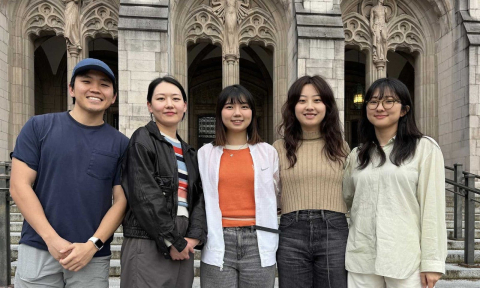
HCDE students earn second place in global IBM Service Design Challenge
A team of HCDE master’s students has earned second place in the IBM Challenge as part of the 2025 Student Service Design Challenge, an international competition inviting students to design services that advance equality and inclusivity. Their project, Echo, addresses a growing need for transparency and ethical communication around the use of AI in speech-language pathology.
Mon, 10/20/2025
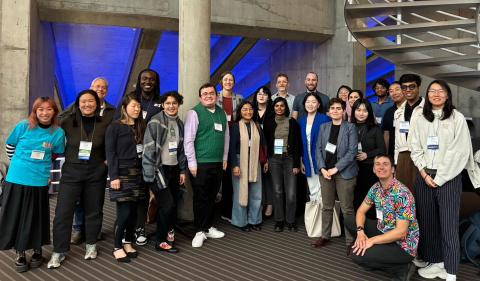
HCDE researchers recognized at CSCW 2025 in Norway
HCDE faculty and students participated in CSCW 2025, the premier international conference on technologies that support collaboration and social interaction, held October 18–22 in Bergen, Norway. Their participation through papers, workshops, and service reflects the department’s active role in advancing research on how people work, learn, and connect through technology.
Wed, 10/15/2025
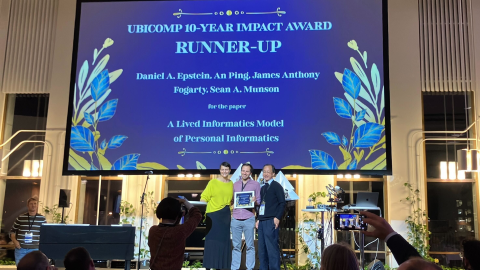
Professor Sean Munson and collaborators recognized with a 10-year impact award at UbiComp 2025
A 2015 paper co-authored by HCDE Professor Sean Munson and colleagues has received the Runner-Up 10-Year Impact Paper Award at the ACM UbiComp 2025 conference. The influential work, “A Lived Informatics Model of Personal Informatics,” introduced a new framework for understanding how people integrate self-tracking technologies into daily life.

Tue, 09/30/2025 | UW News
Q&A: How video games can lead people to more meaningful lives
In a new study, HCDE and iSchool researchers found that gamers reported life-altering experiences from play—from coping with stress to inspiration from storytelling to identity-building. The research will be presented this month at CHI PLAY in Pittsburgh.

Tue, 09/02/2025
Julie Kientz reappointed as Chair of HCDE
Professor Julie Kientz has been reappointed to a second five-year term as Chair of the Department of Human Centered Design & Engineering, following a comprehensive review recognizing her inclusive and collaborative leadership.