
Leah Pistorius
August 25, 2026
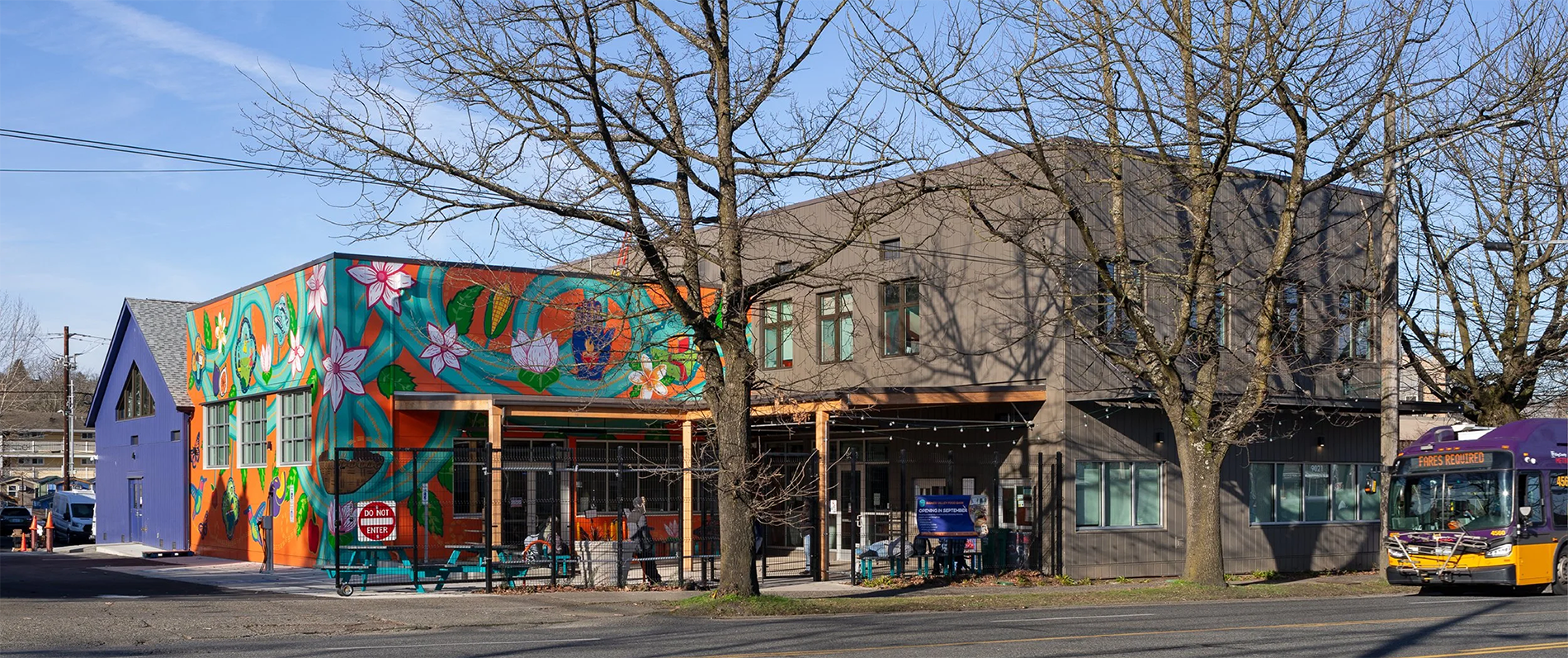
The Rainier Valley Food Bank in Rainier Beach, Seattle
When Seattle's Rainier Valley Food Bank (RVFB) opened its new community hub in the Rainier Beach neighborhood in 2025, staff began asking new questions about how people experienced the organization's services, from learning about available resources to navigating the food bank for the first time.
To help answer those questions, RVFB partnered with students in the University of Washington's Department of Human Centered Design & Engineering (HCDE). Over the course of a year, three Directed Research Groups and a bachelor's capstone team worked alongside food bank staff, volunteers, clients, and neighbors, helping the organization see its services through new eyes.
Understanding the food bank and its community
The partnership began in Summer 2025, before the food bank’s new facility opened to the public. Led by Andrew Davidson, an emeritus professor in HCDE, the Directed Research Group brought together students Zohra Butter, Jordan Cheung, Haneen El-haj, Zahra Hassan, and Vivian Li to work alongside RVFB staff as the organization prepared for its transition into the new space.
Throughout the summer, they spent time learning how the organization worked and how people experienced its services. Through interviews, site visits, and conversations with staff, they explored how clients learned about available resources, where communication could be strengthened, and how the new facility could better support the community it serves.
For Davidson, the summer project reflected an important part of HCDE's approach: taking time to understand people, organizations, and experiences before developing solutions. "When people hear HCDE, they often think about apps or products. But every organization has services and systems that shape how people interact with it,” he said. “Our role is to help students understand those experiences before deciding how they might improve them."
Their work culminated in recommendations to strengthen communication, multilingual outreach, volunteer resources, client feedback, and community engagement, giving RVFB a roadmap as the organization settled into its new home.
Seeing the experience through clients' eyes
When the Directed Research Group returned in Winter 2026 after RVFB's new community hub had opened, returning students Zohra Butter, Jordan Cheung, Zahra Hassan, and Vivian Li were joined by Erzhen Wei and Selome Girma to build on the summer's research and focus on the client shopping experience.
Across multiple visits to the food bank, the students studied how people entered the building, received information, navigated the supermarket-style aisles, and made decisions while shopping. The work continued into spring 2026, when the team refined and user-tested its concepts in partnership with RVFB.
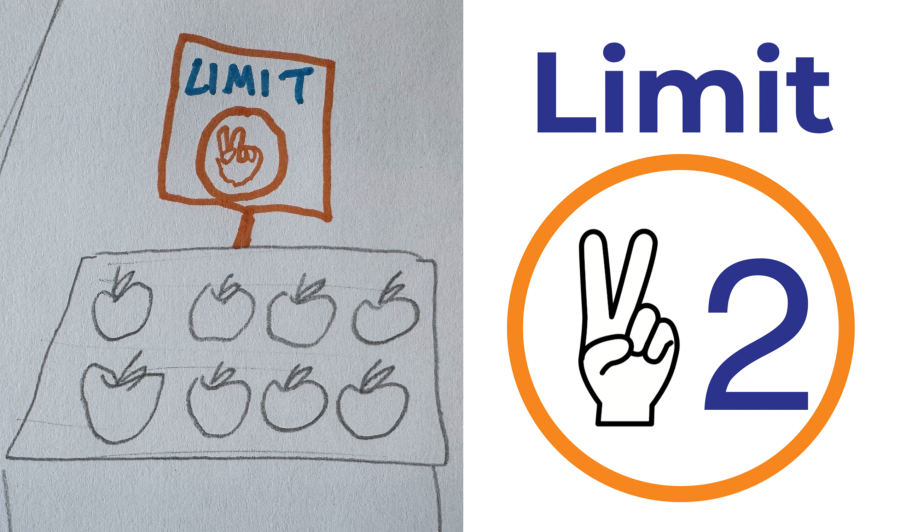
One observation stood out early in the project. While evaluating signs that explained shopping limits, the students noticed many clients weren't reading the text. Instead, they were holding up their fingers to keep track of how many items they could select.
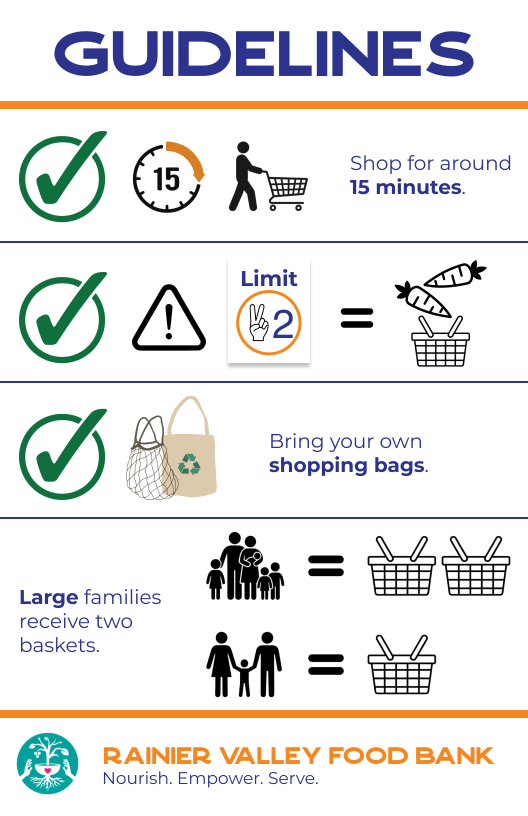
The team translated that observation into a new set of in-store signs featuring larger numbers, finger icons, and familiar visual cues that made shopping limits easier to understand at a glance, regardless of language or literacy level.
The food bank has since incorporated the redesigned signage into the shopping experience.
For Karey Fey, RVFB's director of operations, the value was in what the students noticed. "The students looked at our space through the eyes of our guests and presented thoughtful solutions to challenges we hadn't had time to step back and examine,” she said.
The team also created a pocket-sized client information card for first-time visitors. The card explains how shopping at RVFB works, outlines shopping guidelines and operating hours, and points people to additional community resources using plain language and icons. Paired with a multilingual onboarding poster near the entrance, the materials help new visitors understand what to expect before they begin shopping and give them something they can take home or share with others.
The project continued into spring 2026, when the students refined and user-tested these communication tools in partnership with RVFB. Several of the concepts, including the redesigned shopping limit signs and client information materials, have since been incorporated into the food bank's shopping experience.
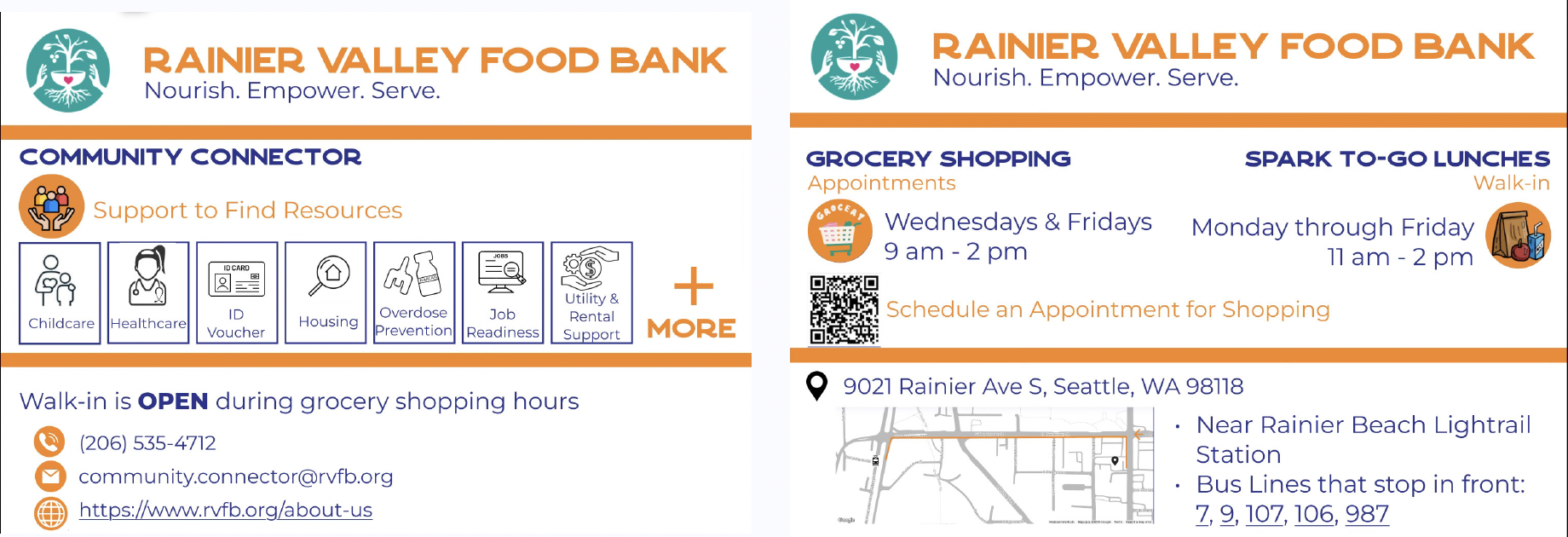
HCDE students designed this client information card using plain language, icons, and visual cues to make information about Rainier Valley Food Bank's services easier to understand and share.
Strengthening connections with the community
Building on the Directed Research Group's work inside the food bank, a bachelor's capstone team turned their attention to the surrounding neighborhood, asking: How might we increase engagement, trust, and perceived accessibility among nearby residents who are not currently using RVFB services?
Students Angel Torres-Puga, Justis Peppin, Wenyi Tsai, and Michelle Nguyen spent two quarters working alongside RVFB staff and community members to better understand why nearby residents were not using the food bank. Through interviews, field studies, and surveys conducted in six languages, they learned that many people were unsure whether they qualified for services, didn't know what to expect during a first visit, or associated food banks with stigma.
The team's recommendations focused on introducing RVFB to the surrounding community before someone ever walked through its doors. Their research showed that meaningful outreach helps people feel welcome, informed, and comfortable seeking support. The students designed a multilingual outreach campaign that included bus shelter advertisements, neighborhood pole banners, informational rack cards, reusable grocery bags, and a promotional video. The campaign introduced RVFB as a welcoming neighborhood resource, answered common questions about eligibility and services, and reinforced a simple message: You belong here.
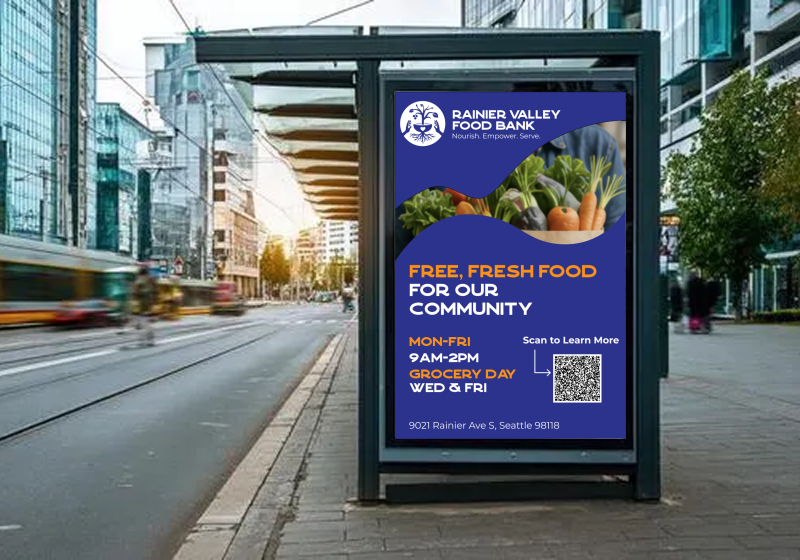
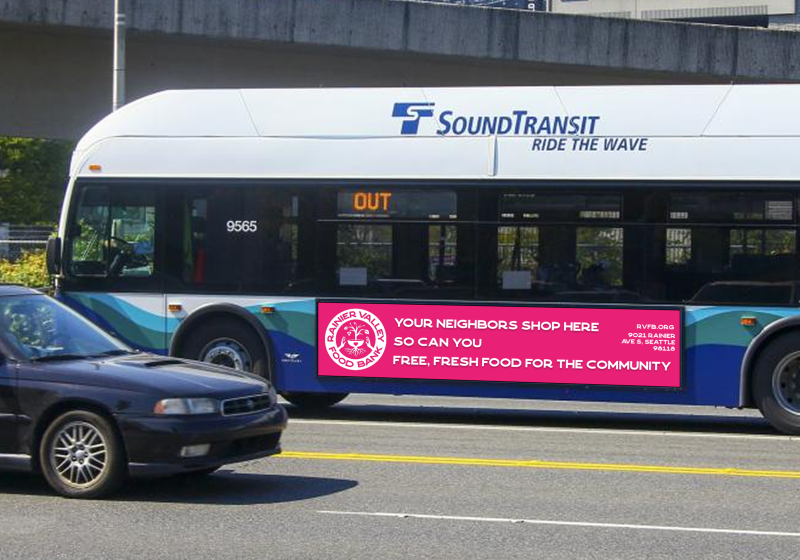
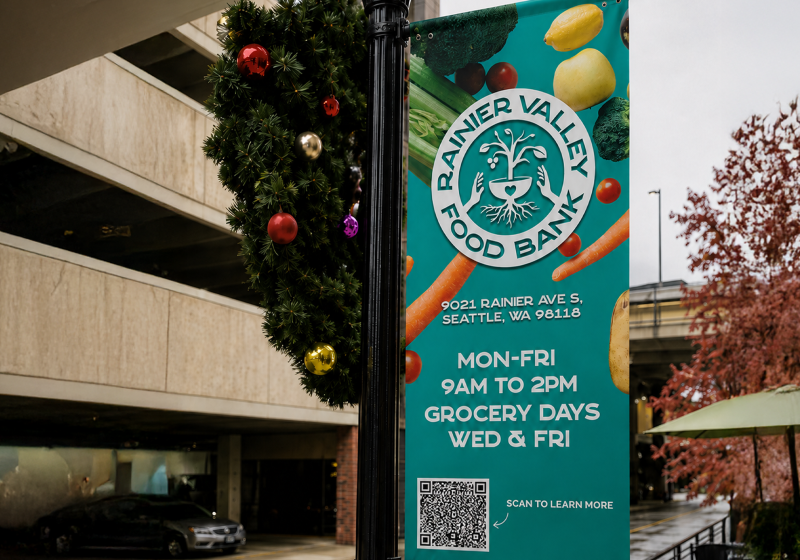
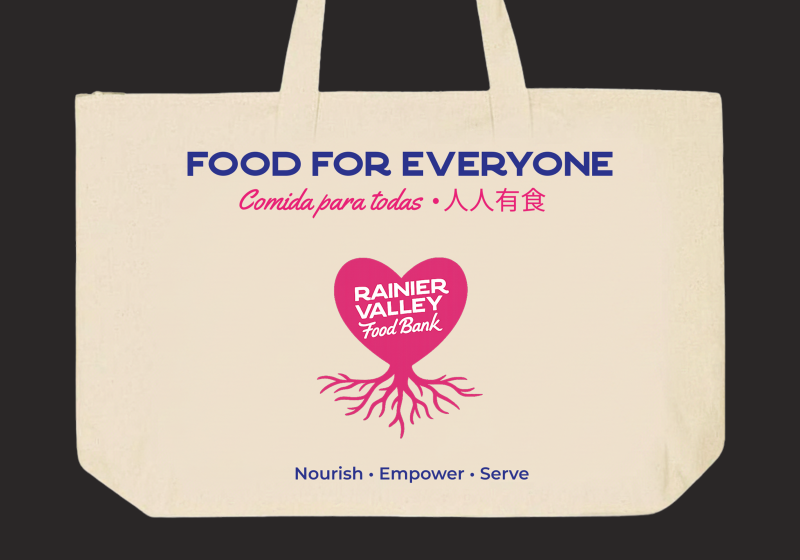
Field observations played a key role in shaping the team's work. As students walked the neighborhood surrounding the food bank, they noticed challenges that hadn't emerged through interviews alone, including how difficult it could be for first-time visitors arriving by bus to identify the entrance.
For Torres-Puga, that experience reinforced one lesson that stayed with him: "We need to see the experience through the eyes of the people. Only then do we realize what improvements matter. Otherwise, we're fixing a problem that serves no one."
For Peppin, the experience changed the way he thought about design. "Working with Rainier Valley Food Bank changed how we approached the project pretty early on," he said. "We came in with an idea of what the problem was based on research and assumptions, but once we were actually talking to staff and community members, it got a lot more real and specific than we expected. The process helped us slow down and actually listen instead of rushing to solutions.”
The project earned HCDE's 2026 Undergraduate Capstone Award for Engagement, and several of the concepts are already informing RVFB's outreach efforts, including conversations with King County Metro about neighborhood advertising and future community engagement.
The value of community partnerships
Over the course of a school year, HCDE students helped Rainier Valley Food Bank better understand the experiences of the people it serves. Their work translated those insights into practical improvements, strengthening communication, making services easier to navigate, and helping the organization build deeper connections with its community.
For Fey, one of the biggest benefits was having time to step back from day-to-day operations.
"We loved working with the HCDE students. They brought a fresh perspective to our work," she said. “Often we're so focused on day-to-day operations that we don't have time to step back and think about how we can make our space more inviting and easier to navigate. We started implementing several of their recommendations right away. The improvements to our grocery store layout and signage have enhanced the guest experience and allowed us to serve more people during shopping hours. We're also using the capstone team's work as a roadmap for our future outreach strategy."
Have a challenge for HCDE students?
Organizations can partner with HCDE capstone teams on real-world challenges involving research, design, accessibility, outreach, digital experiences, and more.
Projects run January – June 2027, and there is no sponsorship fee for nonprofit partners.