
Leah Pistorius
July 20, 2026
HCDE master's student Selah Key recently presented her independent research project, Ordinary Days, at the AI for Good Global Summit in Geneva, Switzerland, where it received a Best Use Case award through the International Telecommunication Union's (ITU) Innovate for Impact initiative.
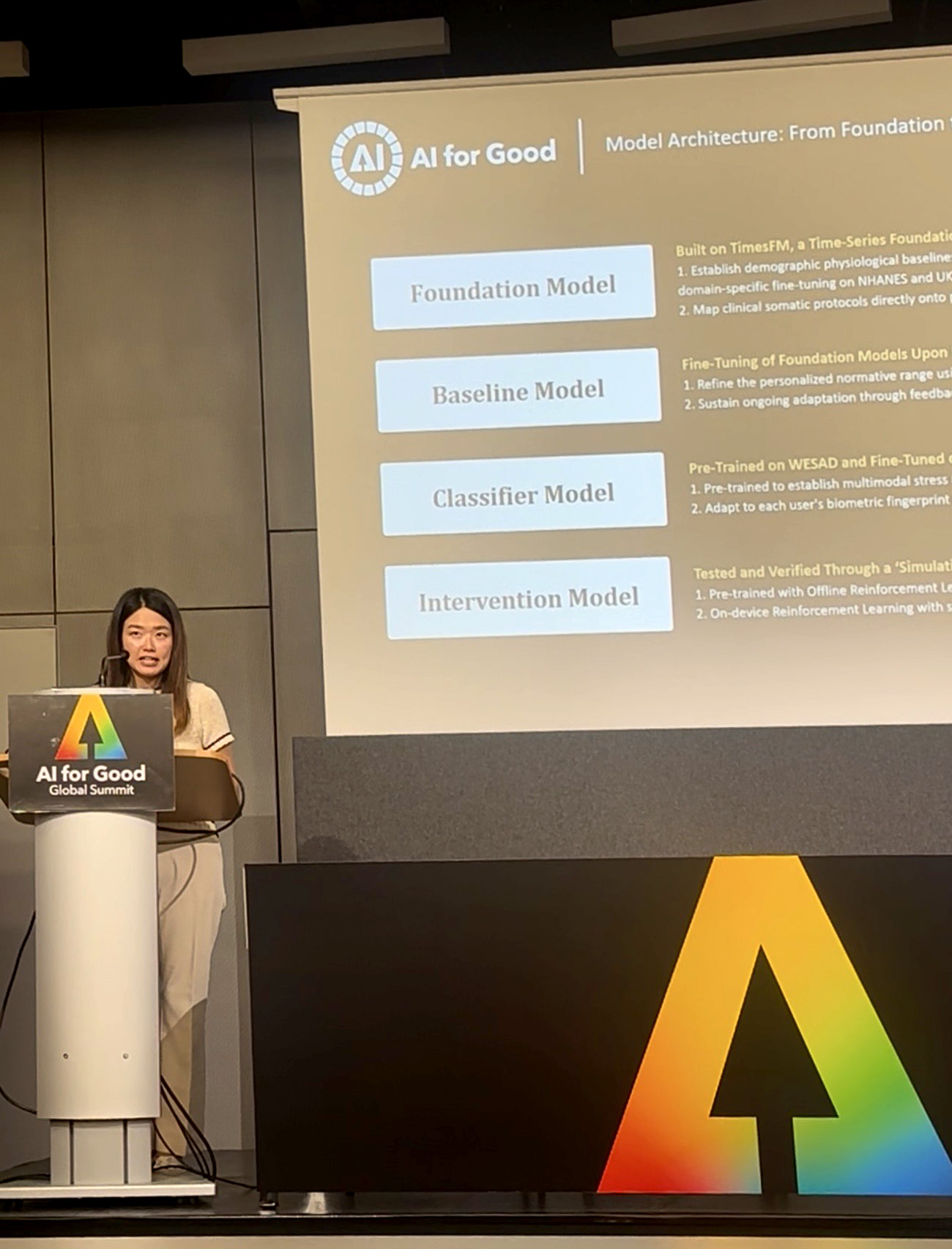
HCDE master's student Selah Key presents Ordinary Days at the AI for Good Global Summit in Geneva, Switzerland, where the product received a Best Use Case award through the International Telecommunication Union's Innovate for Impact initiative.
The AI for Good Global Summit, organized by the ITU, the United Nations specialized agency for information and communication technologies, brings together researchers, policymakers, industry leaders, and international organizations exploring how artificial intelligence can address global challenges.
As an invited speaker, awardee, and author of the 2026 Innovate for Impact Report, Key shared her research 'Ordinary Days' with an audience focused on democratizing real-time, personalized stress intervention at the nervous-system level through on-device AI.
For Key, the experience reinforced the importance of designing AI systems that begin with people's lived experiences. "The world is vast, and there are so many leaders leveraging AI to build truly meaningful models and products," she said. "It was incredibly inspiring to see how AI is being used to create impact across different communities and to be part of global conversations about AI for societal impact."
Ordinary Days is a context-aware, multimodal AI system designed to help people better understand and respond to chronic stress. Rather than simply interpreting biometric data, the system combines contextual data from user input and digital behaviors using privacy-preserving methods. In this way, the system recognizes true individual stress patterns and delivers personalized, evidence-based interventions. The approach is designed to preserve user agency by incorporating human input throughout the process instead of relying solely on automated predictions.
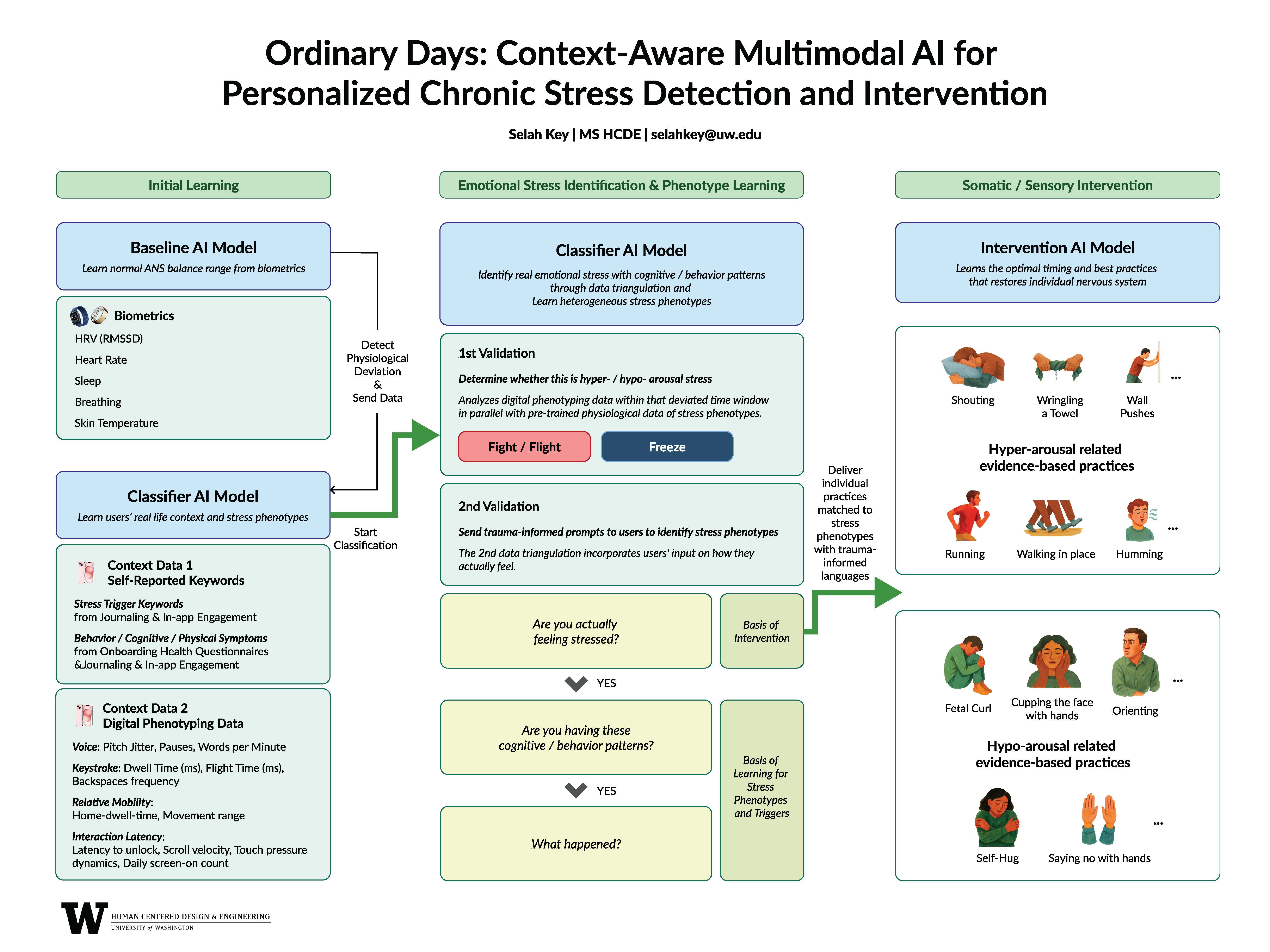
Ordinary Days combines data from wearable devices, contextual information, and user feedback to recognize individual stress patterns and recommend personalized interventions. The system is designed to keep people actively involved in the decision-making process.
For Key, the system architecture reflects an HCDE approach to AI: one that combines technical innovation with an understanding of human behavior, context, and decision-making.
"My goal has always been to create human-centered technology that helps people live happier, more authentic lives," she said. "HCDE gave me the flexibility to combine human-computer interaction, AI, clinical neuroscience, and design research into one project."
Throughout her master's program, Key has drawn on concepts from across the HCDE curriculum. Qualitative Research Methods courses helped her validate the value of voice journaling for interpreting real users' context. MHCI+D's Advanced Interfaces course informed her approach to incorporating multimodal design into Edge AI products by designing visual, auditory, and haptic feedback. AI Prototyping courses gave her the confidence to design and build an end-to-end prototype that embodies her philosophy, while HCDE's interdisciplinary environment encouraged her to integrate perspectives from engineering, health, and design into a single human-centered AI system.
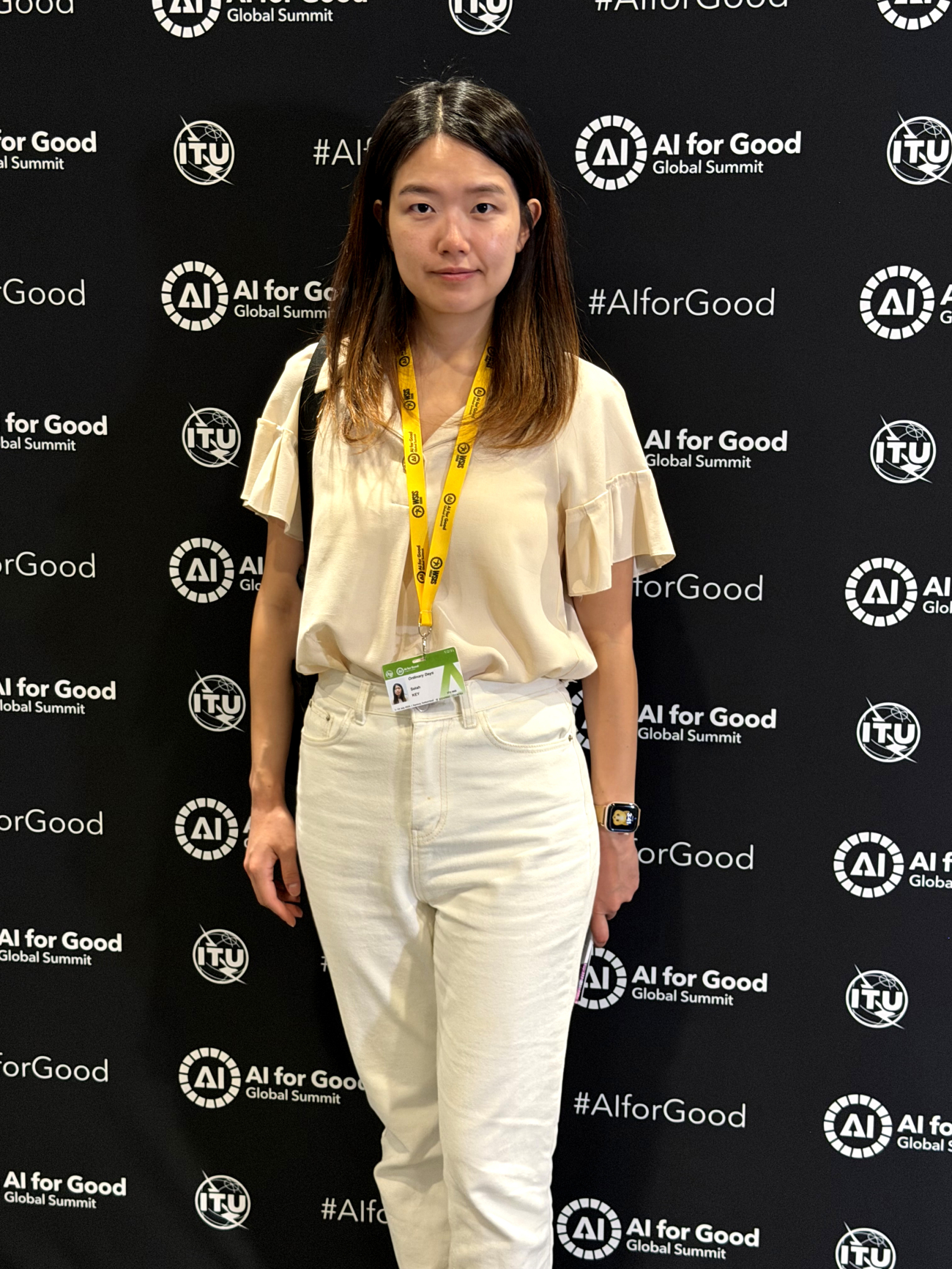
Key attended the AI for Good Global Summit as an invited speaker, awardee, and author of the 2026 Innovate for Impact Report. The summit brings together researchers, policymakers, and industry leaders to explore how artificial intelligence can address global challenges.
"I learned to think about the invisible architecture behind AI," she said. "How the model learns, what data it uses, and how people interact with it are all part of designing a human-centered system."
Those fundamentals shaped several key product decisions throughout the design process. Instead of treating AI as an authority, Ordinary Days asks users to confirm how they are actually feeling before providing support. The system learns from those interactions over time, helping personalize future recommendations while keeping people actively involved in their own care.
The idea for Ordinary Days grew from Key's own exploration of chronic stress and recovery during a medical leave. As she collected and analyzed her own health data, she delved into how prolonged stress affects the autonomic nervous system, brain, and body. She also realized that numerous people struggle with the long-term effects of chronic stress, unaware of the root cause.
"I learned that many people interpret these experiences as personal failings rather than understanding what's happening in their nervous system," she said. "I wanted to create technology that helps people better understand themselves."
Over the past six months, the project has gained recognition across research, innovation, business, and interdisciplinary communities. Ordinary Days received a Best Use Case award at the AI for Good Global Summit, was featured in the AI for Good Innovate for Impact Report 2026, accepted to three workshops at the 2026 ACM CHI Conference on Human Factors in Computing Systems, named a finalist in the Hollomon Health Innovation Challenge, and presented at the HCDE Research Showcase, the GPSS Interdisciplinary Research Symposium, the UW Institute for Medical Data Science Symposium, and the UW Science & Technology Showcase.
Presenting at the AI for Good Global Summit marked another milestone in the product’s evolution. "This was my first time presenting not to pitch an idea, but to share a solution that had been evaluated, recognized, and celebrated by experts from around the world," Key said.
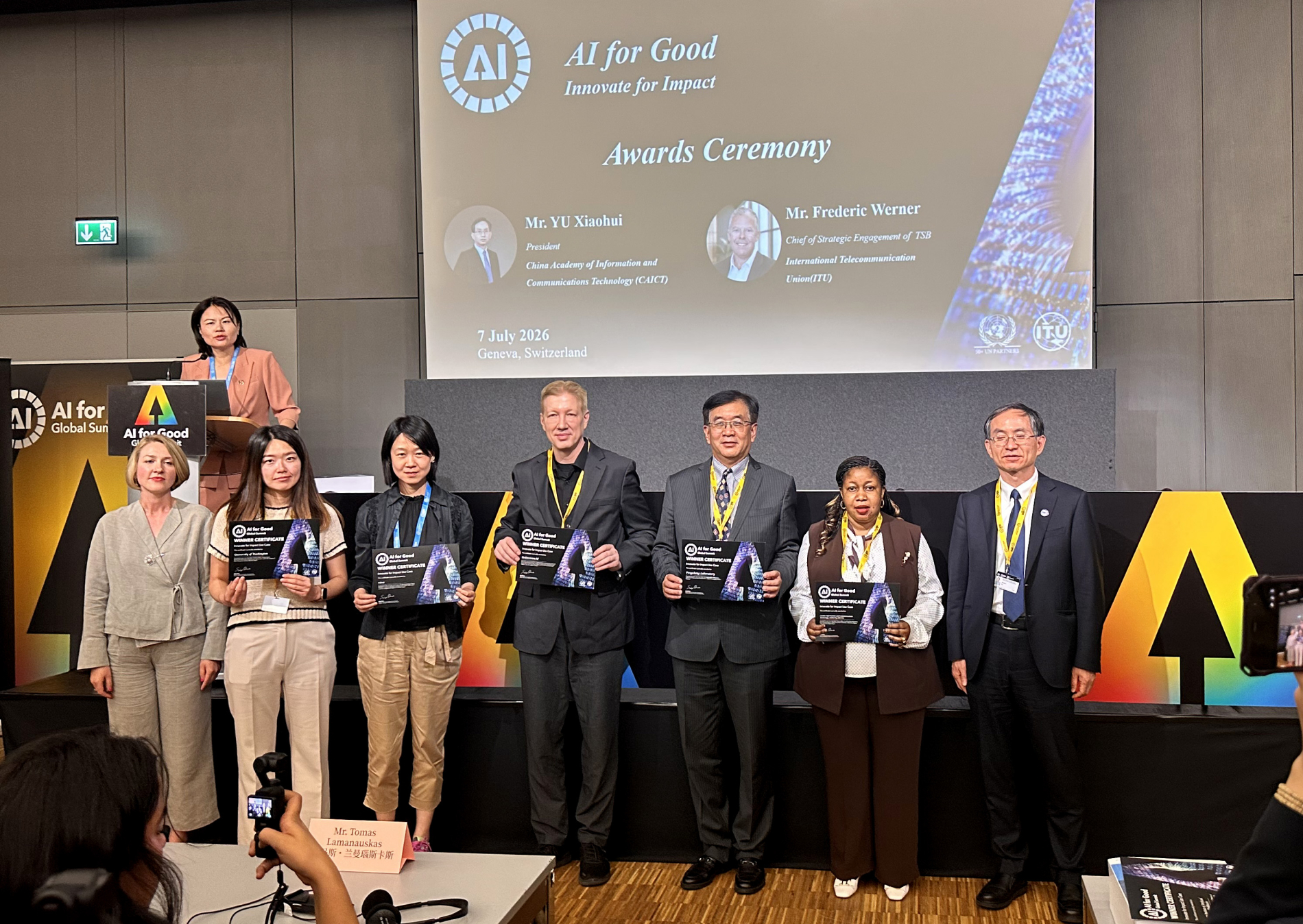
Selah Key (second from left) stands with fellow award recipients at the 2026 AI for Good Global Summit, where products were recognized for their potential to advance positive social impact through artificial intelligence.
The experience further fueled her passion for shaping the future of AI. "It has strengthened my desire to see this work scale to a population level," she said. "I will continue pushing this work forward to make a meaningful difference in the lives of everyday people."
For Key, the recognition demonstrates that technical innovation and human-centered design are complementary. As AI continues to evolve, she believes designing systems around people's experiences, contexts, and needs will be essential to creating technologies that have lasting societal impact.