
Leah Pistorius
September 14, 2026
Just after the end of the school year, four UW Human Centered Design & Engineering students traveled to Alaska to spend a week alongside engineers researching the future of marine energy.
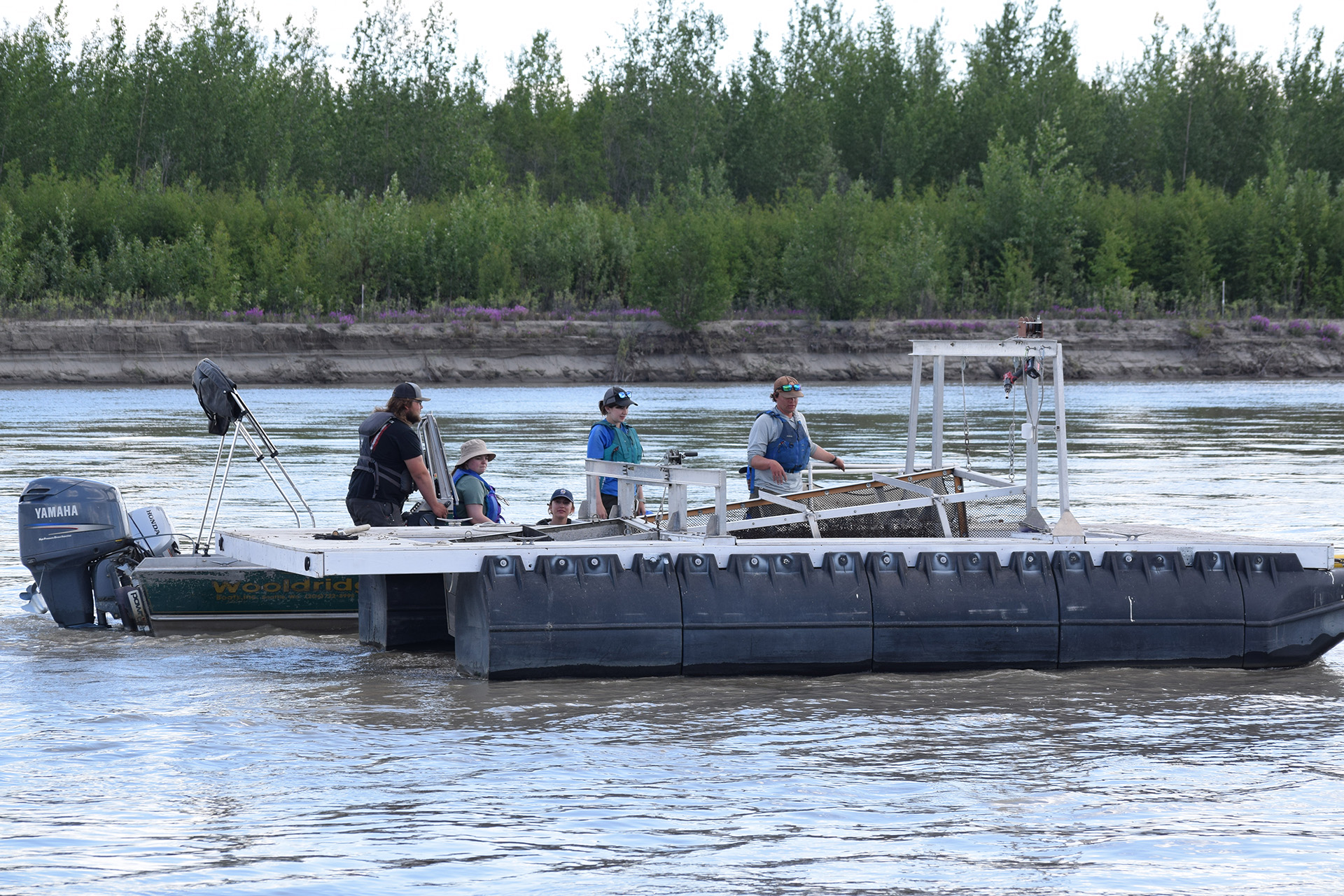
Based at a remote field station, they traveled out on the water and helped researchers count fish as part of a study examining the environmental interactions of a river turbine. It was hands-on fieldwork in a domain far outside the typical HCDE classroom.
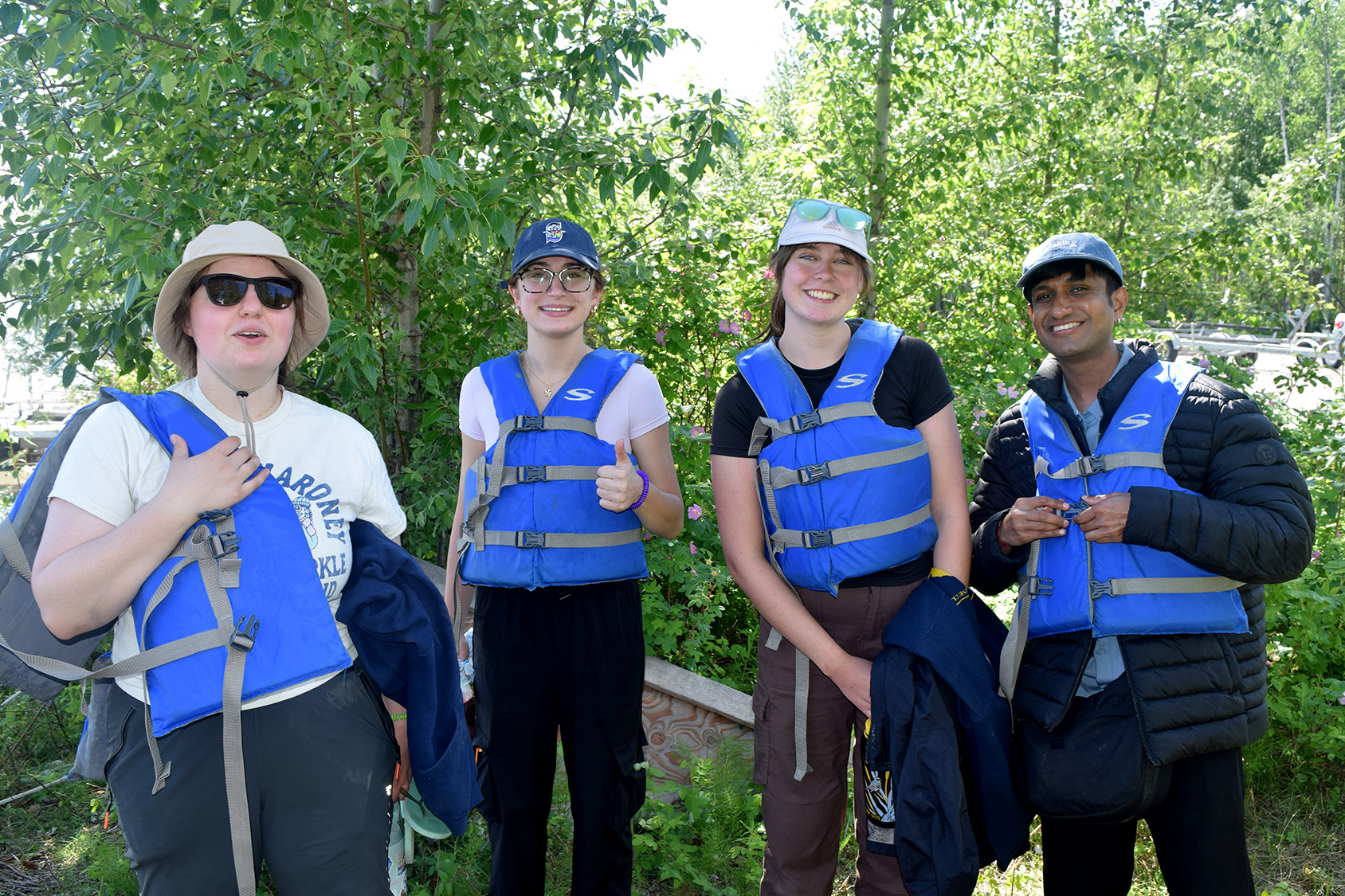
HCDE students Jessica Forcucci, Samantha Scalia, Rachit Singhi, and Ella Nicole Dooley Gebers made the trip as part of a three-quarter Directed Research Group led by HCDE Assistant Research Professor Shana Lee Hirsch and Judy Twedt, Communications and Programs Manager for the Pacific Marine Energy Center (PMEC).
The group spent the 2025-26 year exploring how human-centered methods could help marine energy researchers better understand and engage the communities their technologies may affect.
Bringing HCDE expertise to marine energy
Marine energy technologies harness energy from waves, tides, rivers, and ocean currents. As researchers develop these emerging technologies, they also have to consider how projects may affect the livelihoods, environments, and cultural values of nearby communities. How researchers build trust, communicate, and involve communities in decisions can shape how those projects move forward.
When PMEC sought to incorporate community engagement into its broader research program, Hirsch saw a perfect opportunity for HCDE students to contribute. “A lot of people talk about the need for community engagement and ask, ‘How do we do this?’” Hirsch said. “I knew exactly the people they needed to be talking to: HCDE students.”
EXPLORE THE TOOLKIT
Community Engaged Research Toolkit
Explore resources and methods for bringing community perspectives into marine energy research and development.
Over three academic quarters, students reviewed 53 published papers and interviewed four marine energy researchers about how community engagement shows up in their work. They found plenty of existing resources for community-engaged research, but those resources weren't always easy for technical researchers to find or put into practice.
The team created a publicly available Toolkit for Community Engaged Research, which gathers research, examples, and engagement methods in one place for marine energy researchers and engineers.
“We have all of these methods for conducting co-design in HCDE — how to do a workshop, how to facilitate a discussion, how to get ideas out on the table,” Hirsch said. “The toolkit brings those resources together in one place, so researchers can more easily find approaches that are useful for their work.”
Learning in the field
For the four students who traveled to Alaska, the project also offered a unique opportunity to experience the research firsthand. Working alongside University of Alaska Fairbanks researchers, they participated in fieldwork examining interactions between fish and a river-based turbine near a small Indigenous community.
For HCDE master's student Rachit Singhi, the experience challenged some of his own assumptions about the relationship between design and engineering.
“I went into the project thinking of myself very much as a designer rather than an engineer, partly because I assumed engineering could rush toward building without always sitting with the person on the other end,” Singhi said. “Being in Alaska challenged that assumption. I saw engineers thinking deeply about where and how a technology should be deployed so it wouldn't disrupt migrating fish that nearby communities depend on for food and livelihoods. The engineering question and the community question turned out to be the same question.”
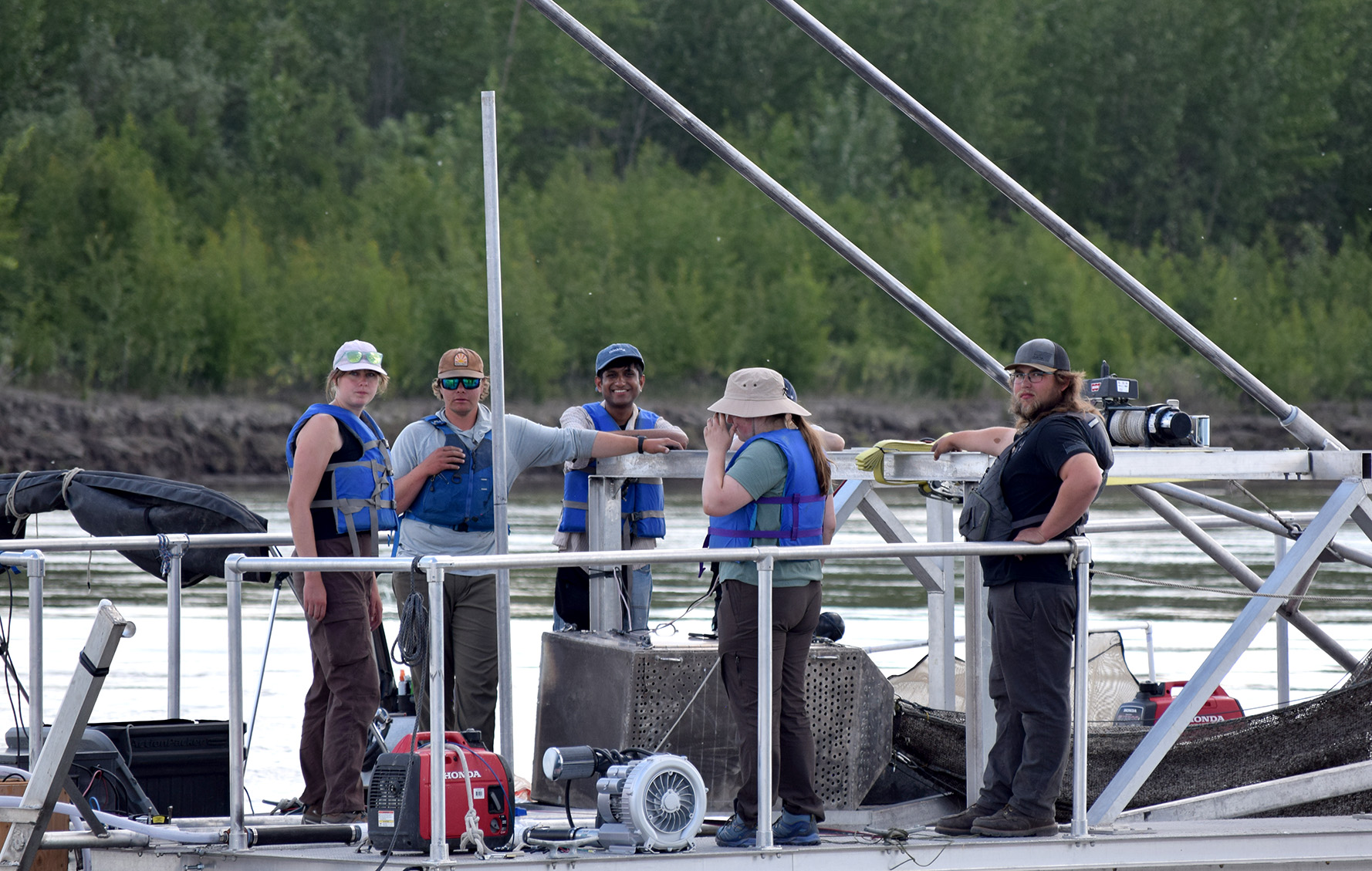
The trip also gave students a chance to learn about marine energy research by becoming part of it.
“The best way to learn about a topic is usually to just go and do it,” Hirsch said. “Taking part in the research was an excellent way for them to understand what those researchers are dealing with and living with in the day-to-day.”
For Hirsch, that exchange was one of the most valuable parts of the project: HCDE students brought their own methods and ways of thinking into a new engineering field, while getting an up-close look at how technical, environmental, and community questions come together in practice.
Learn more
Read the full project brief: Technology Impacts, Community Futures: Engaging Marine Energy Researchers on Community Concerns (June 2026).
Authors: Hirsch, S. L., Brittain, L. A., Chen, O., Cheung, L., Chung, C. L., Dicke, M., Dooley Gebers, E. N., Elhaj, H. M., Forcucci, J., Foster, A., Ha, H., Hu, Z., Mittal, K., Ng, W., Scalia, S., Singhi, R., & Twedt, J.