
Leah Pistorius
December 17, 2025
At the University of Washington’s Department of Human Centered Design & Engineering, Associate Professor Nadya Peek and researchers in the Machine Agency lab are designing open, adaptable automation systems that scientists can customize to fit their own research.
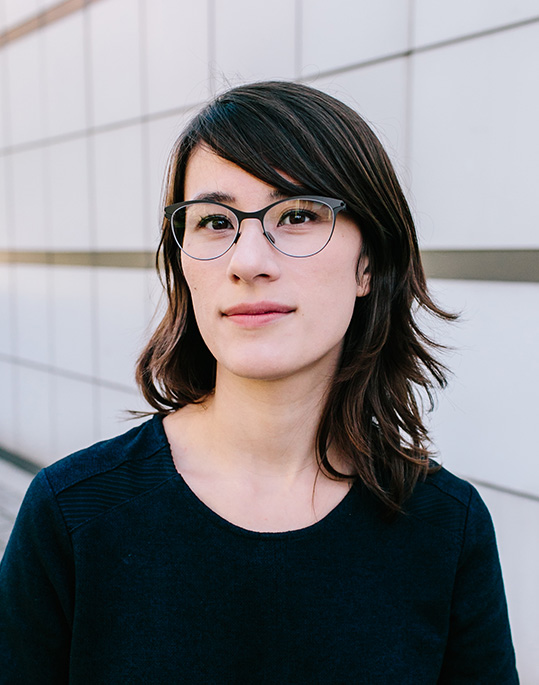
Nadya Peek is an associate professor in the Department of Human Centered Design & Engineering, where she directs the Machine Agency.
Working with experts across disciplines, Peek is helping to make experimentation more reproducible and creative, broadening who can participate in scientific discovery.
Designing automation with scientists
Peek’s automation research draws on her background in open, flexible tools for fabrication. The Jubilee platform, developed with Machine Agency students, is an open-source, multi-tool hardware system adopted by hundreds of users around the world for digital fabrication.
Today, that work has expanded into “Science Jubilee,” a hardware and software platform for laboratory automation. Developed in collaboration with Professor Lilo Pozzo in Chemical Engineering, Science Jubilee builds on the Jubilee system by adding a software suite tailored for scientific workflows, giving researchers a low-cost and highly customizable way to run automated experiments in their own labs.
The Pozzo Research Group has used Science Jubilee for high-throughput sample preparation, or mixing, measuring, and photographing a large number of samples at once. In one project, they worked with eutectic solvents, combinations of materials that change properties like melting temperature when mixed at the right ratio.
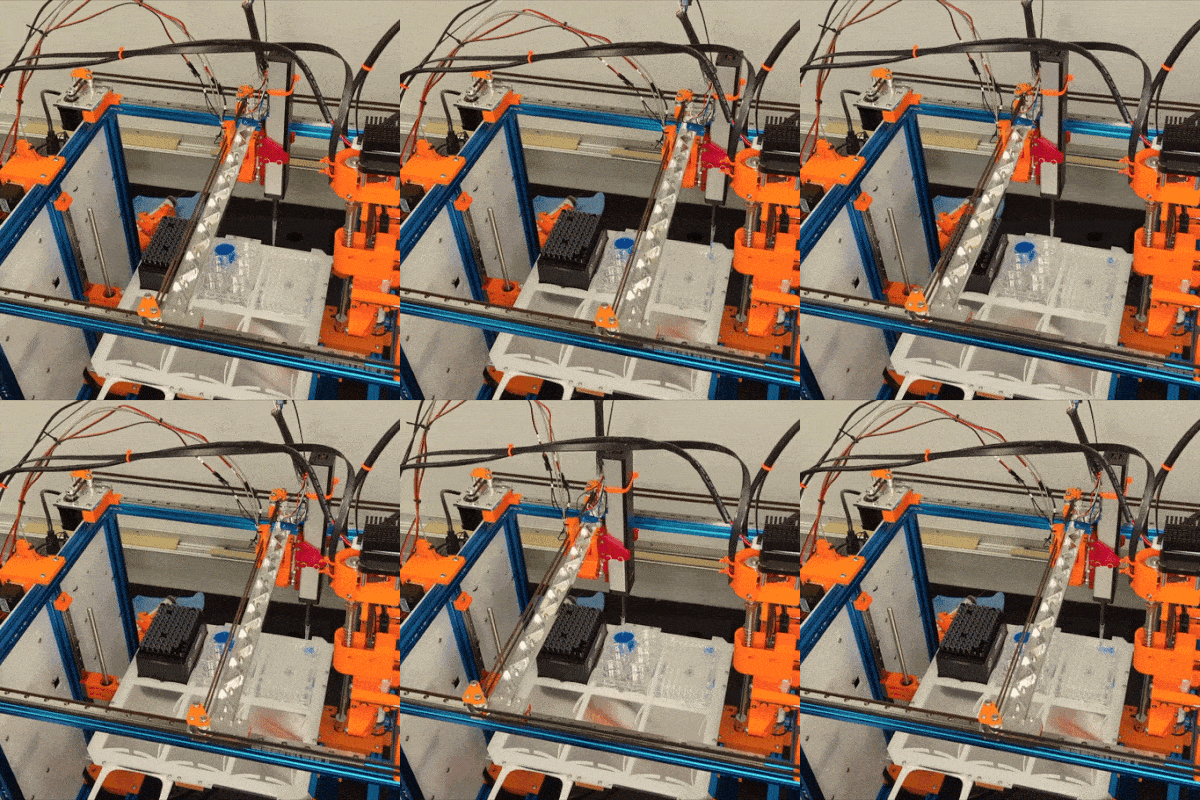
A Science Jubilee setup performs automated pipetting. The open-source platform can be adapted for many lab automation applications, including imaging and sample manipulation.
Peek explains the impact automating this can have: “You can take five materials that are all solid at room temperature. If you combine them in a certain way, they suddenly become liquid. That can be hugely useful for the development of things like batteries or material coatings. But finding those combinations by hand could take years.”
Peek also collaborates with Professor Eleftheria Roumeli’s Materials Science Lab and Professor Corie Cobb’s Mechanical Engineering Integrated Fabrication Lab on projects that range from battery design to sustainable polymers made from kelp and spirulina.
“Every scientific field works differently,” Peek says. “A biology lab working with living samples faces totally different constraints than a materials lab testing new compounds. One setup can’t serve everyone, so our goal is to develop toolkits that scientists can customize and adapt for their own spaces.”
Workshops that build community
Peek’s research extends beyond UW to a growing network of collaborators around the world. Through the Pathways to Open-Source Hardware for Laboratory Automation workshops, she has been bringing together scientists and engineers from universities, government labs, and industry to design the future of laboratory automation together.
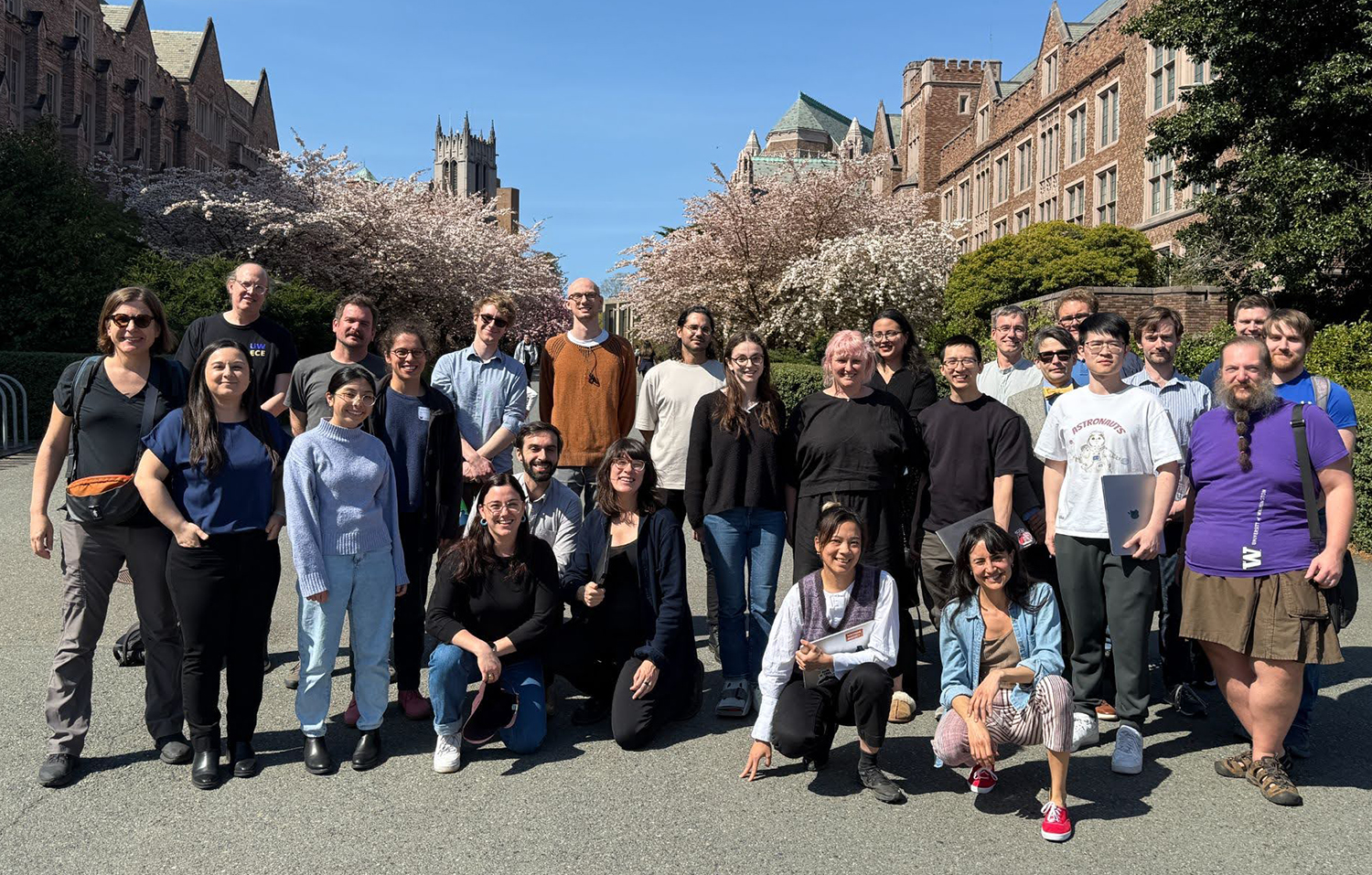
Participants in the Pathways to Open-Source Hardware for Laboratory Automation workshops gathered on the UW campus in Spring 2025 for hands-on collaboration and toolbuilding.
Held in Seattle in 2024 and 2025 with support from the National Science Foundation’s Pathways to Open Source Ecosystems (POSE) program, the workshops gathered participants for several days of hands-on collaboration. Teams co-designed and prototyped new lab tools, shared automation strategies, and improved documentation to make these systems easier to adopt and adapt across disciplines.
The community also shares code, design files, and documentation from each workshop online, encouraging others to extend their tools for their own research and contribute their improvements back to the community.
“To make open-source automation thrive, we need shared infrastructure, shared learning, and shared community,” Peek says. “These workshops are how we have been building that foundation together.”
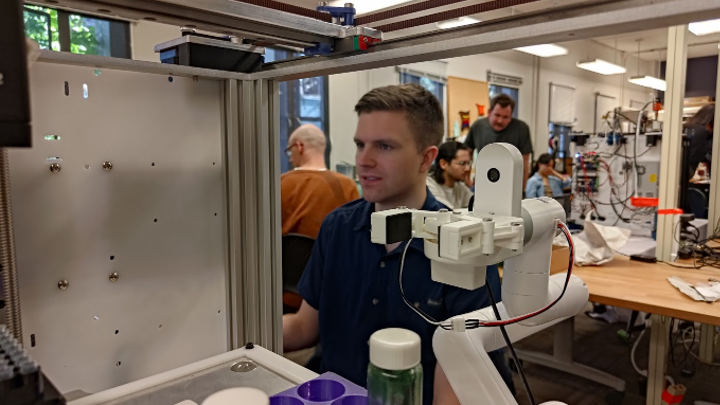
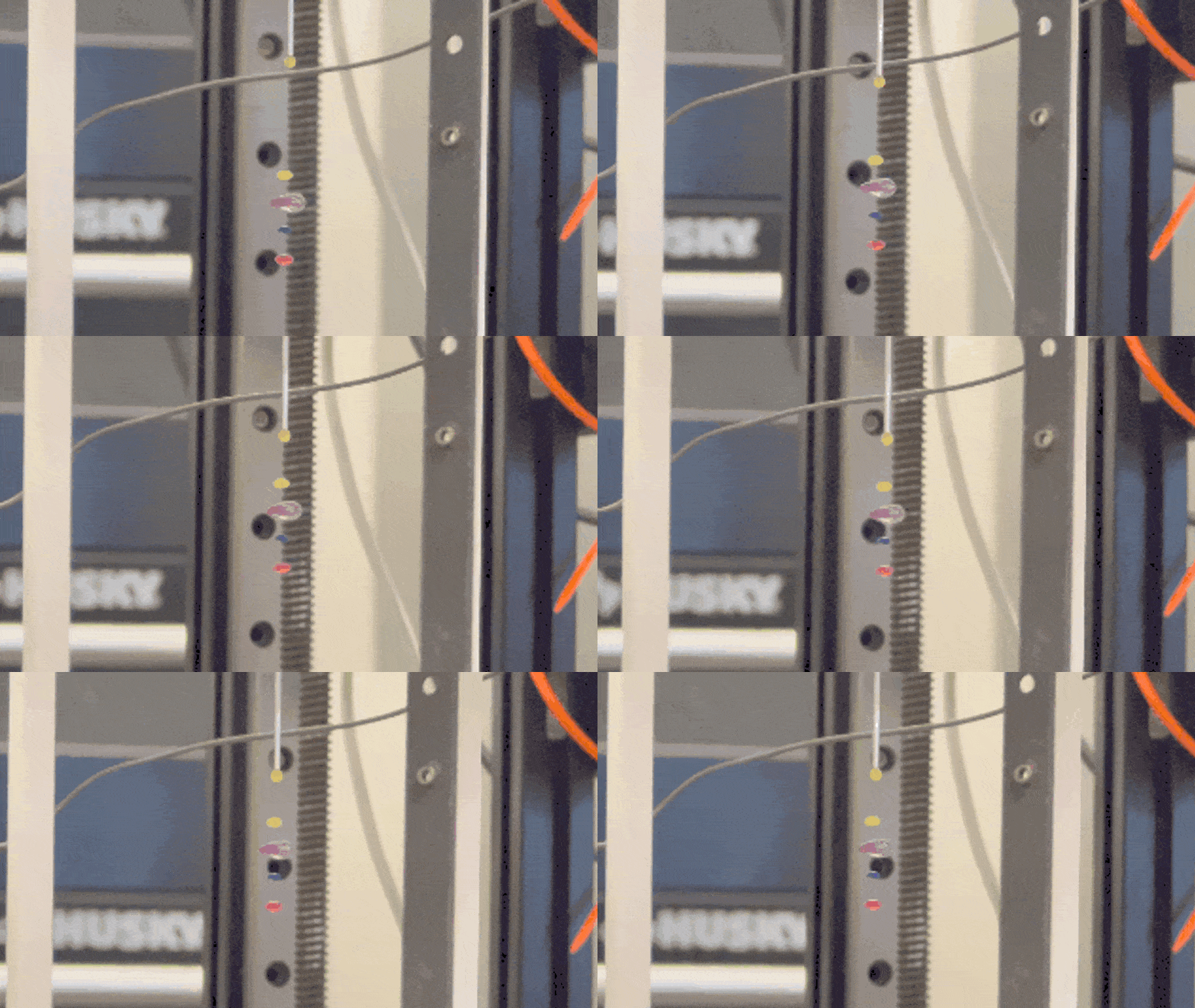
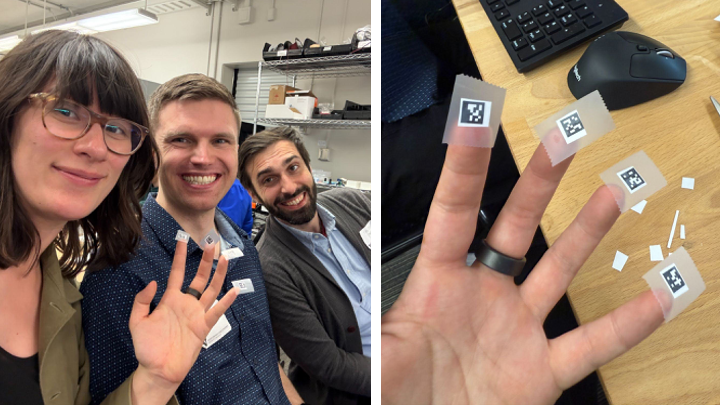
During the 2025 workshop, participants experimented with new automation workflows using Science Jubilee and other open-source tools. Projects ranged from ultrasonic “droplet magic” that levitates and mixes fluids, to QR tags placed on robots to support joint estimation.
Expanding access and shaping the future of discovery
For Peek, the impact of this work extends beyond advances in automation technology. Her goal is to make scientific tools more accessible, expanding who can take part in discovery and where that discovery can happen.
“We already have labs that are highly automated,” she explains, “but they’re often very well-resourced and in specific locations. Having access to automation means having access to precision and repeatability. If only a few labs can afford that, it limits who can make discoveries. We want to make that precision accessible to anyone.”
Looking ahead, Peek and her collaborators are exploring self-driving laboratories—environments where automation acts as a collaborator in discovery rather than a machine that simply follows instructions. “The idea behind self-driving labs is in changing how experiments are done,” she explains. “Instead of testing a million combinations by hand, someone can program a machine to run one experiment, review the results, and determine the next step.”
Peek believes that broadening access to automation is key to pushing science and innovation forward. “Invention can come from anywhere,” she says. “The more people who have access to the tools and infrastructure to make scientific discoveries, the better equipped we are to tackle the hardest challenges.”