
Leah Pistorius
March 31, 2026
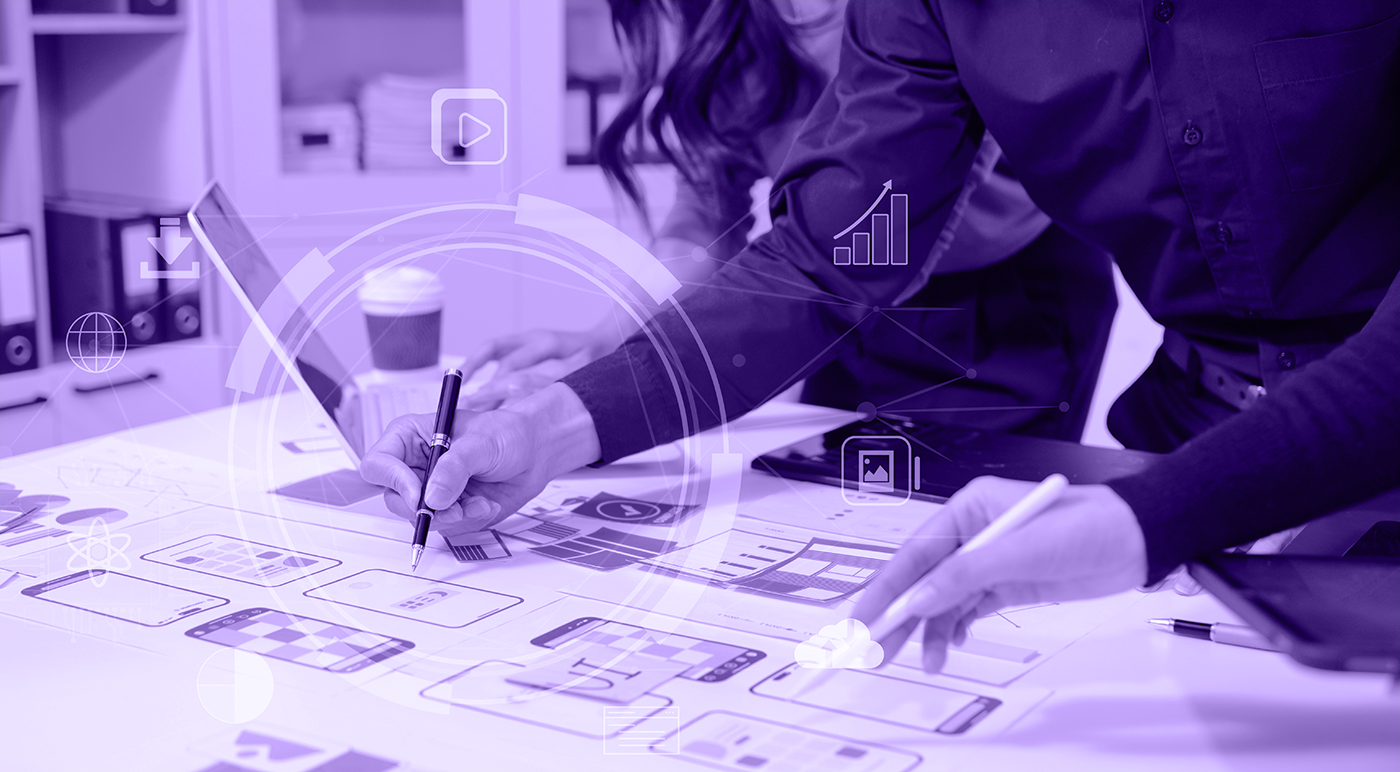
HCDE Professor Gary Hsieh’s Prosocial Computing Group is developing new tools that help practitioners apply research insights in their work.
Scientific research plays an important role in how we understand people and design the technologies that shape daily life. Peer-reviewed studies offer tested insights into human behavior, cognition, and the effects of different design choices. These insights are valuable to the designers and practitioners who make decisions about real-world products and services, yet much of this knowledge remains difficult to use in everyday practice. Research findings can be hard to locate, time-consuming to interpret, or written for academic audiences rather than for professionals who need clear, actionable guidance.
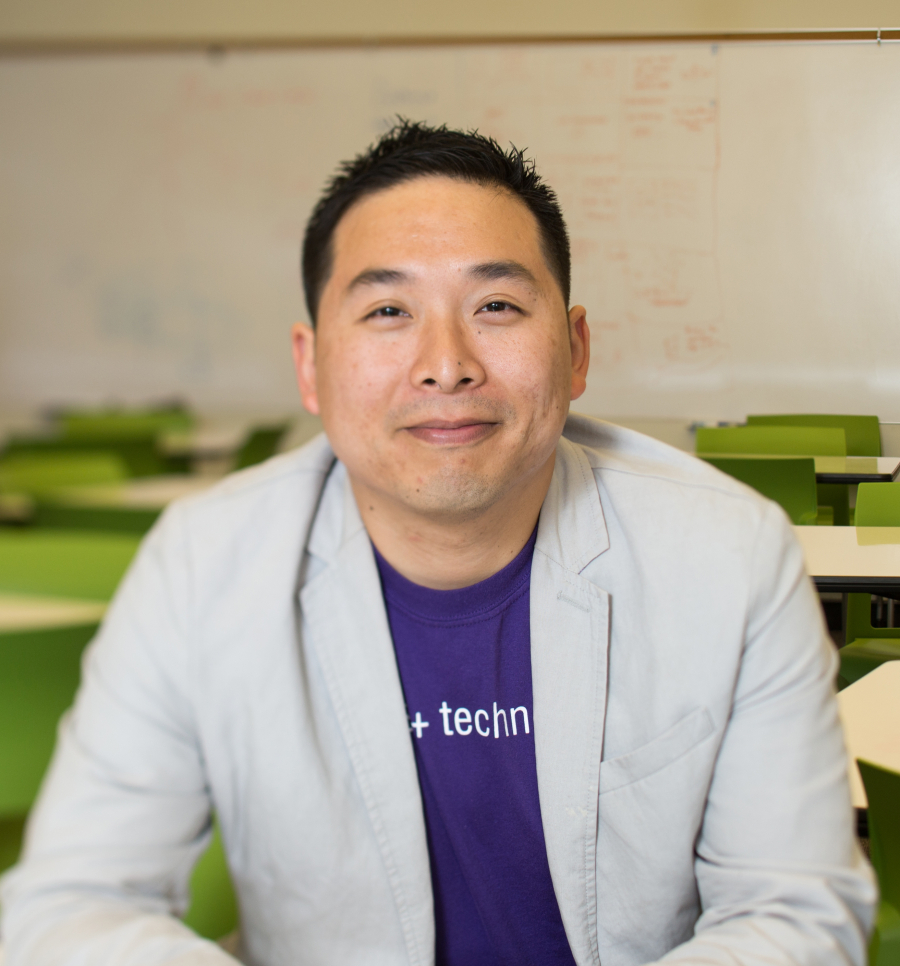
Gary Hsieh is a professor in the Department of Human Centered Design & Engineering and director of the Prosocial Computing Group.
In the Department of Human Centered Design and Engineering, Professor Gary Hsieh and students in his Prosocial Computing Group are working to close this research-practice gap. They are developing tools that translate dense scientific papers into formats practitioners already use, like design cards, app plug-ins, policy briefs, presentation slides, and short-form videos. The goal is to make research easier to discover and integrate into everyday workflows, supporting more evidence-informed decisions that make their way to the products and services people rely on.
Supporting design practitioners with research they can use
The Prosocial Computing Group studies how practitioners discover, interpret, and apply evidence in their day-to-day work, and how new tools can better support those processes. Recently, the group has been exploring how generative AI can synthesize research and keep pace with the growing volume of new studies being published.
One example is Paper2Card, led by PhD student Donghoon Shin and in collaboration with iSchool Assistant Professor Lucy Lu Wang. Paper2Card uses AI to convert academic articles into design cards, a familiar format that helps practitioners quickly scan findings and brainstorm ideas without wading through dense research papers. More recently, the team developed ReFine, a Figma plug-in that lets designers find and apply research insights directly within their design workflow.
Alongside these AI-driven tools for practitioners, the group is also exploring ways to communicate science more broadly. For example, they developed PaperTok, which uses generative AI to transform academic papers into short-form videos by automatically producing scripts and visual concepts tailored to different audiences.
“Research is valuable only when people can use it,” said Hsieh. “Our goal is to put insights where practitioners can find them so they can inform everyday decisions.”
Communicating research to broader audiences
Although much of the group’s focus is on design practitioners, Hsieh notes that evidence-informed decision-making extends beyond the design community. The team also studies how scientific information can be communicated to the public, policymakers, and others who rely on clear explanations of complex findings.
Spencer Williams (PhD ’23) explored this through his work studying confidence in the safety of vaccines. His research focused on how vaccine science could be visualized in more accessible ways, helping the public make informed decisions based on accurate and digestible information. Lucas Colusso (PhD ’20) examined how different groups in the human-computer interaction community exchange and use research knowledge and designed early translational tools that helped establish concepts the lab continues to build on today.
The group has also been examining how policymakers engage with research, led by Master’s student Alex (Tze-Yu) Chen. Interviews revealed that while policy professionals see AI as a promising tool to help reduce barriers to writing and enhance the quality of policy briefs, participants stressed the need for human involvement and oversight. So the team is exploring tools that can support collaboration between policymakers and AI to develop these communication artifacts.
The drive to close the research-practice gap
For Hsieh, the motivation to close the research-practice gap is both academic and personal. After years of publishing research on behavior change, he realized that many of the insights he found most meaningful were not appearing in real-world products. Designers often made important choices without knowing relevant studies even existed. “I believed these papers, and countless other papers I’m reading by my colleagues, could help people design better systems, but I wasn’t seeing them being used,” he said. “So, basically, figuring out how to close this gap became a new thread of my research.”
Much of this impact happens in the background. A single research-backed insight might influence a small interface adjustment or a subtle behavioral cue. Each decision may seem minor on its own, but as Hsieh explains, “Sometimes the impact is seen through a small bit of insight that shapes a single decision. When these decisions accumulate, they influence everything from the technologies people rely on to the ways communities make choices and adopt new behaviors.” Translational work may not be highly visible, but it can shape systems on a large scale.
Because HCDE blends engineering, design, social science, and communication, Hsieh sees this work as central to the department’s mission. “A core competency of HCDE is helping people translate insights from one community to another,” he says. “That translational ability is what makes human-centered systems actually work.”
Researchers with Hsieh in the Prosocial Computing Group include doctoral students Ruoxi Shang, Ruican Zhong, Donghoon Shin, Hyeonjeong Byeon, and Meziah Ruby Cristobal, along with student researchers Alex Chen and Tony Zhou. A full list of past collaborators and alumni can be found on the lab’s website. Their work has been supported by National Science Foundation, National Institute of Health, Center for Disease Control and Prevention, Fulbright, Microsoft, Google, Nokia, Center for an Informed Public, UW ALACRITY Center, OPTICC Center, and the Institute of Translational Health Sciences.
Together, they are developing ways to bring evidence directly into the hands of people who design and implement the systems we rely on every day. By making research easier to use, the team aims to support more thoughtful and human-centered solutions.