
Leah Pistorius
July 23, 2026
By 2050, Washington's population is expected to grow by nearly 1.8 million people. As more people rely on the state's roads, bridges, airports, ferries, and rail systems, leaders will face difficult decisions about where transportation investments are needed most.
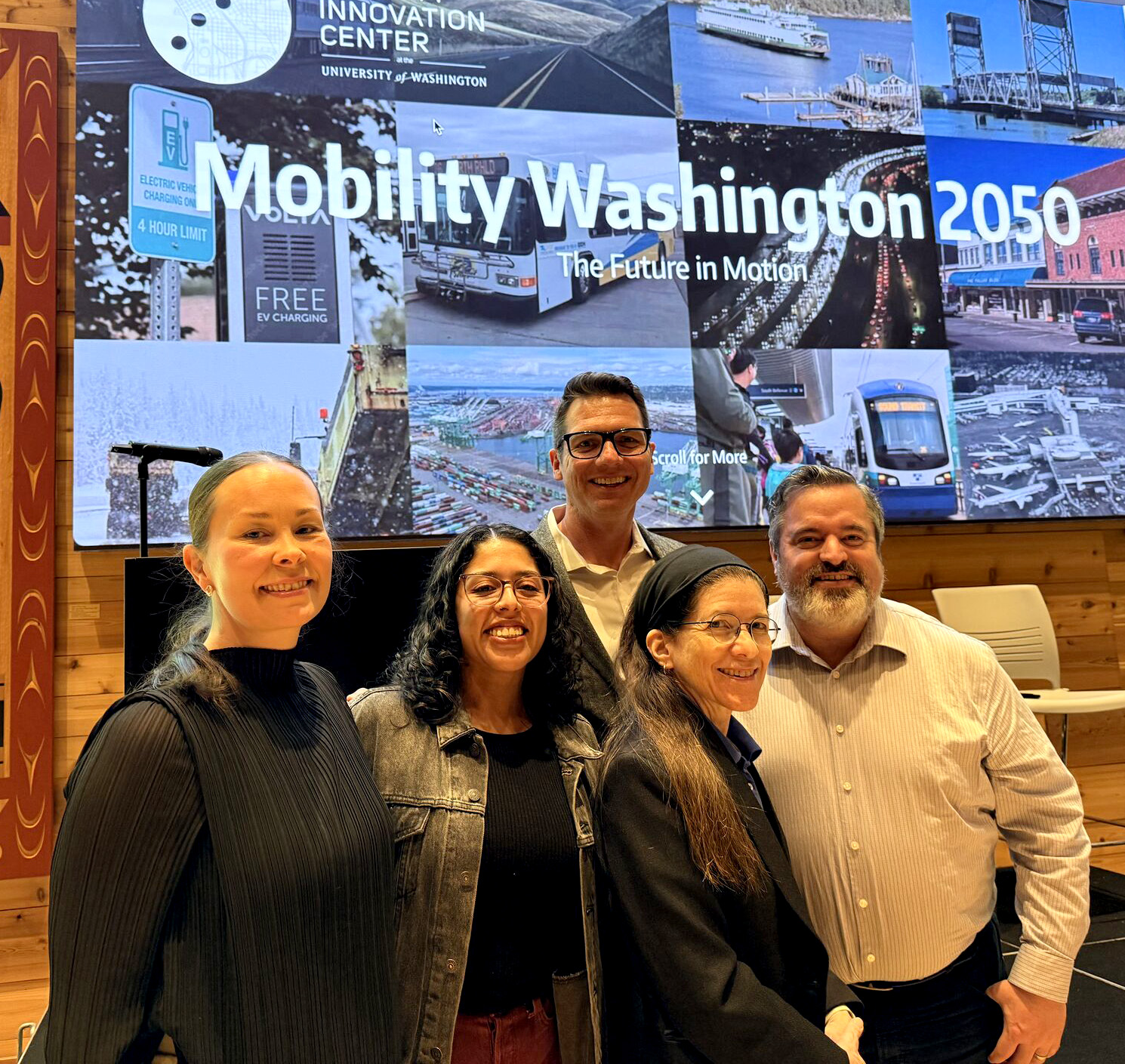
Researchers and collaborators gather for the launch of Mobility Washington 2050 at the UW in May 2026. Pictured are HCDE researchers Susanna Lammervo, Andrea Figueroa and Cecilia Aragon, Mobility Innovation Center Director Bart Treece, and Washington State Transportation Research Center Deputy Director Ryan Avery.
Helping people understand those choices and the tradeoffs behind them is the goal of Mobility Washington 2050, a new interactive platform that brings together transportation and infrastructure data from across the state in a public resource that anyone can explore.
Led by the University of Washington's Mobility Innovation Center, the project brought together researchers and partners from government, industry, and academia. HCDE Professor Emerita Cecilia Aragon served as faculty lead, bringing her expertise in human-centered data science and visualization. The core team also included Mobility Innovation Center Director Bart Treece, Washington State Transportation Research Center Deputy Director Ryan Avery, HCDE alumna Dr. Andrea Figueroa (PhD '26), and current HCDE PhD students Susanna Lammervo and Vishnupriya Napa Ravikumar.
Together, the team applied human-centered design methods to transform decades of transportation planning data into an interactive tool that makes complex information easier to explore.
"Transportation and infrastructure data can be very technical and challenging to read or interpret," Lammervo said. "This project brings multiple data sources together in one place and visualizes them in a way that helps both decision-makers and the public better understand why infrastructure investments are urgent across Washington state."
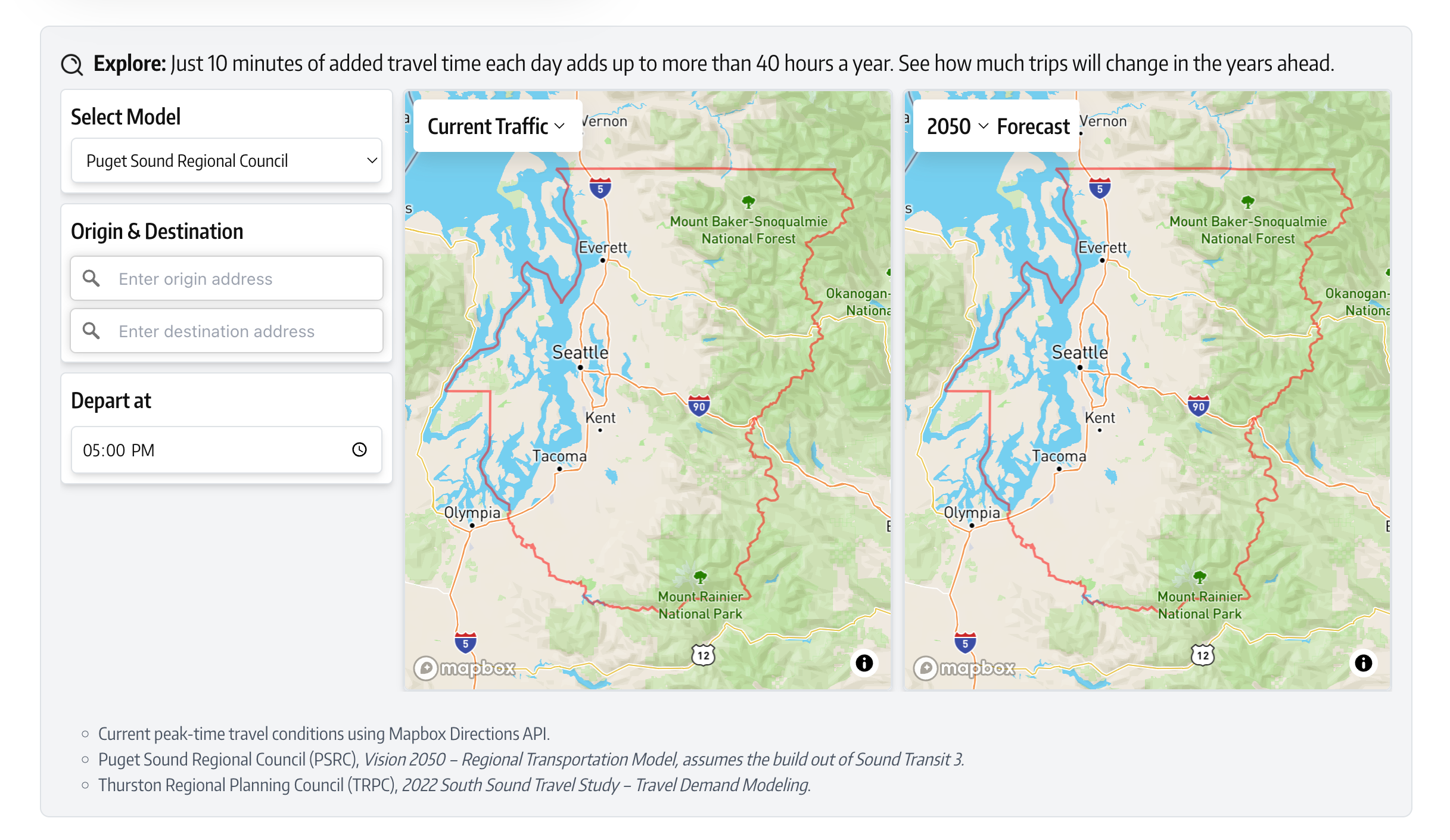
Interactive maps let people see how projected population growth could affect everything from daily commutes to airport capacity and aging bridges over the coming decades.
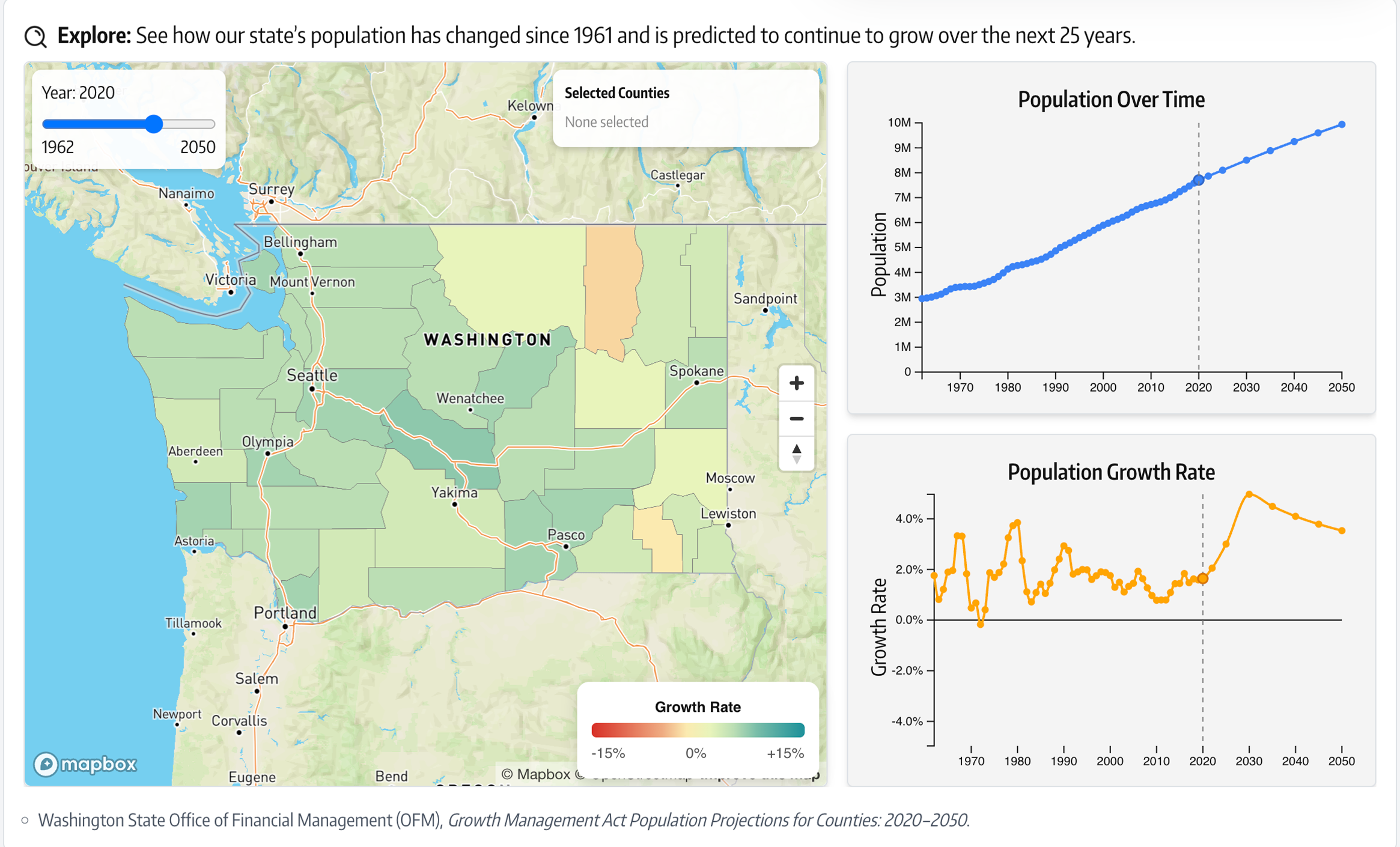
The Mobility Washington 2050 interactive platform allows users to explore projected population growth, transportation trends, and infrastructure challenges through maps and visualizations.
Designing with people, not just data
Behind the platform is a great deal of transportation modeling and long-range planning. HCDE's role was making that information usable.
Lammervo led the project's user experience (UX) research and usability testing, interviewing transportation professionals and members of the public and evaluating the interface using established usability methods.
User feedback shaped the platform throughout development. "The platform was designed, developed, and improved through an iterative approach where testing the site with real users and gathering feedback was at the core," she said.
Through interviews and usability testing, the team discovered that long-term infrastructure planning can feel difficult for people to relate to. "A 25-year vision can feel abstract and irrelevant to most of us," Lammervo said. "The tool is trying to communicate those long-term outcomes through more concrete scenarios that are closer to the lived experiences we have every day, like changes to daily commutes."
That insight influenced how information is presented across the platform, grounding future projections in familiar places and everyday travel.
Helping people make informed decisions
Mobility Washington 2050 helps communities and policymakers explore transportation data, understand long-term infrastructure needs, and discuss the choices that will shape Washington's future.
"The goal is to provide transparent information about the current state of Washington's infrastructure and future needs," Lammervo said. "Beyond that, I hope it helps people move from thinking about infrastructure as something abstract to understanding how it affects their own daily lives."
The platform was publicly launched at the University of Washington in May 2026, where leaders from government, industry and higher education gathered to explore the new resource and discuss how human-centered data visualization can support transportation planning.
Speakers included former Washington Governor and Challenge Seattle CEO Christine Gregoire, HCDE Chair Julie Kientz, Washington State Department of Transportation Secretary Julie Meredith, Senator Marko Liias, and Mobility Innovation Center Director Bart Treece.
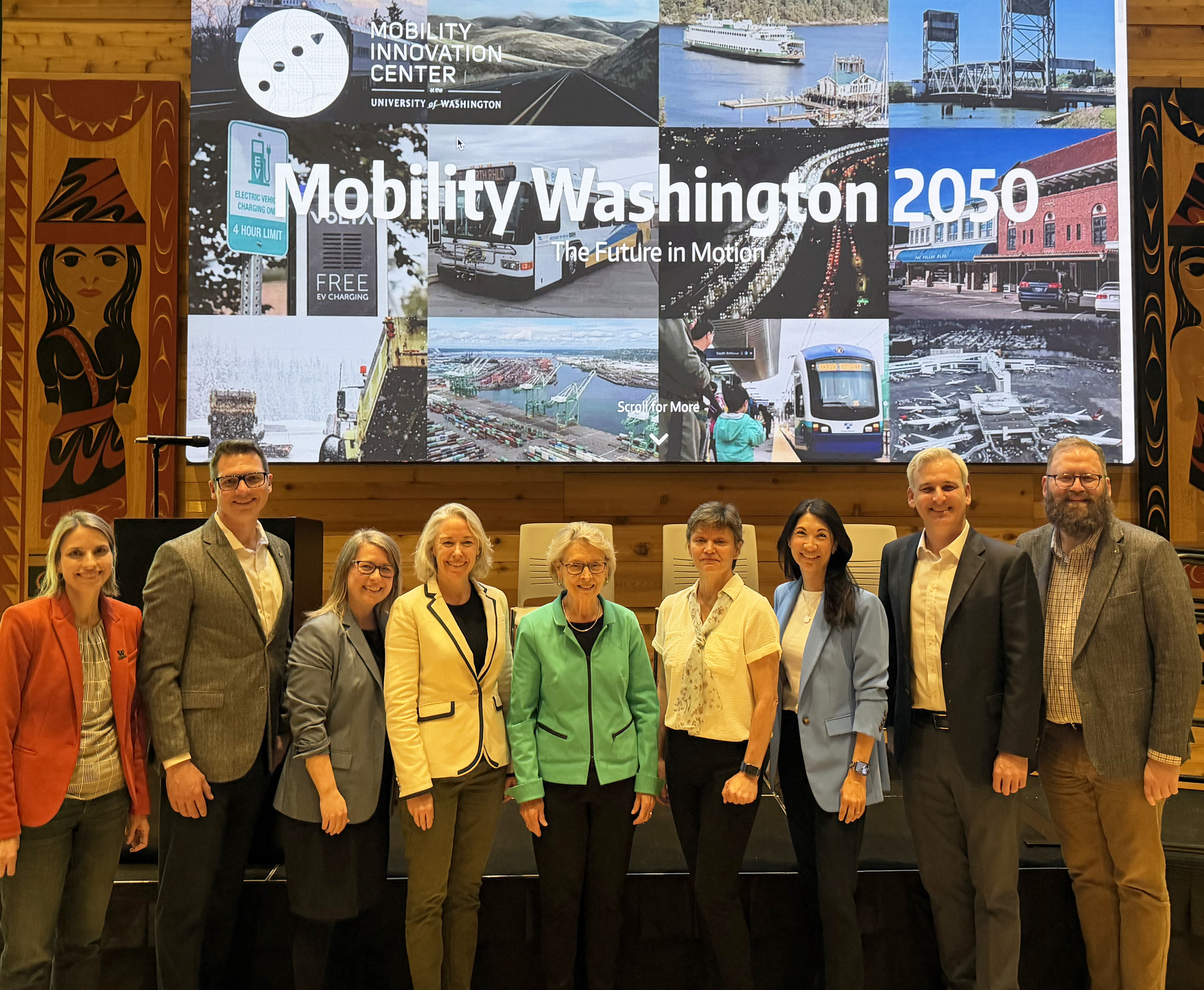
HCDE Professor and Chair Julie Kientz (left) joins leaders from government, academia, and industry at the May 2026 of Mobility Washington 2050.
As Washington prepares for continued growth, Mobility Washington 2050 demonstrates how human-centered design can make complex public information easier to understand. By giving people a clearer picture of how transportation decisions affect their own communities, the platform supports more informed conversations about Washington's future.
Explore Mobility Washington 2050
Compare today's commute with projections for 2040, or see how a bridge closure could affect travel in your community.