
Leah Pistorius
December 29, 2025
In November 2025, the University of Washington’s Department of Human Centered Design & Engineering welcomed students for wearABLE Futures, a fast-paced design jam focused on the question: How might we make wearable technology more accessible to all humans?
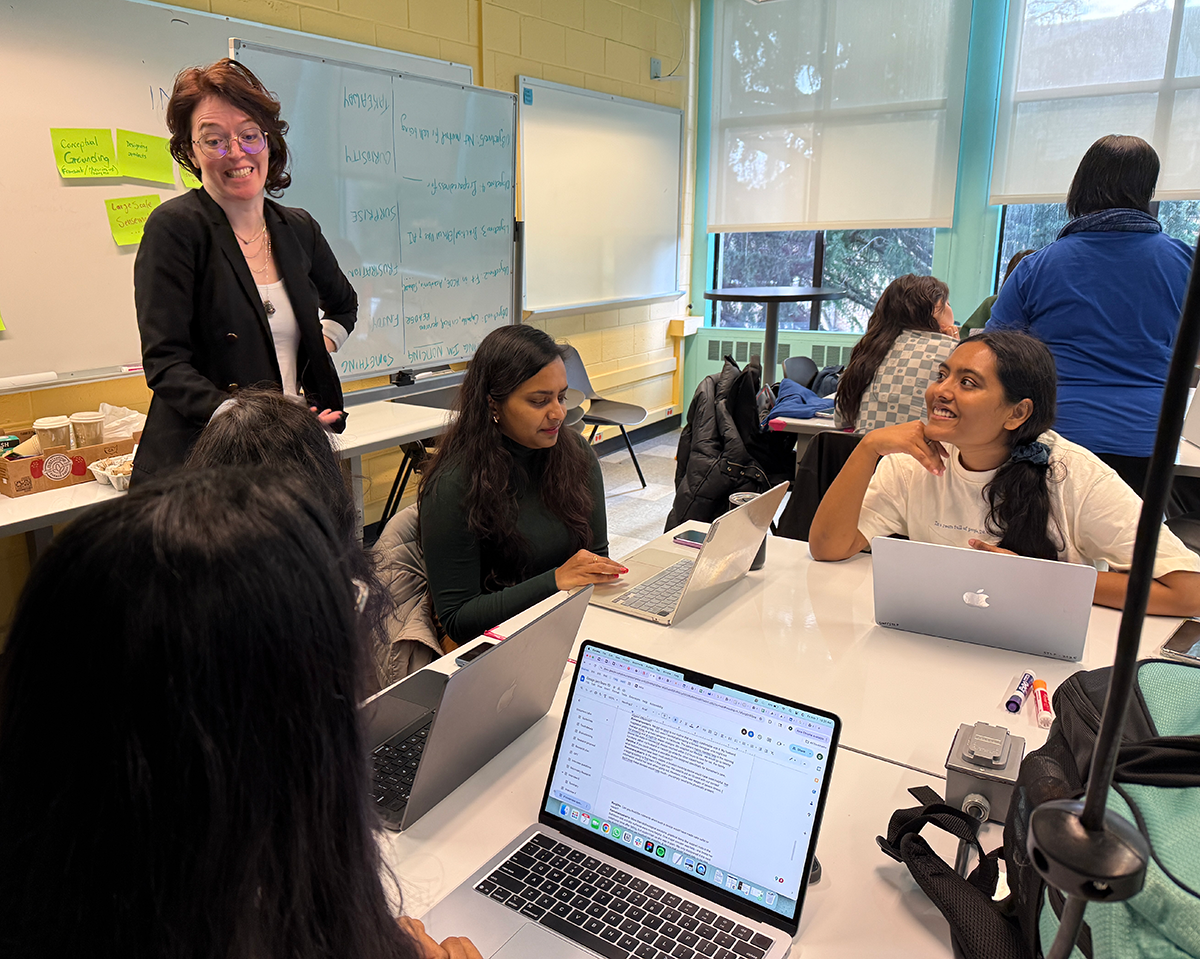
Hosted by HCDE in partnership with the Center for Research and Education on Accessible Technology and Experiences (CREATE) and Ipsos, the design jam brought together 40 students for a day of collaboration and prototyping, grounded in weeks of user research and guided by industry and academic mentors.
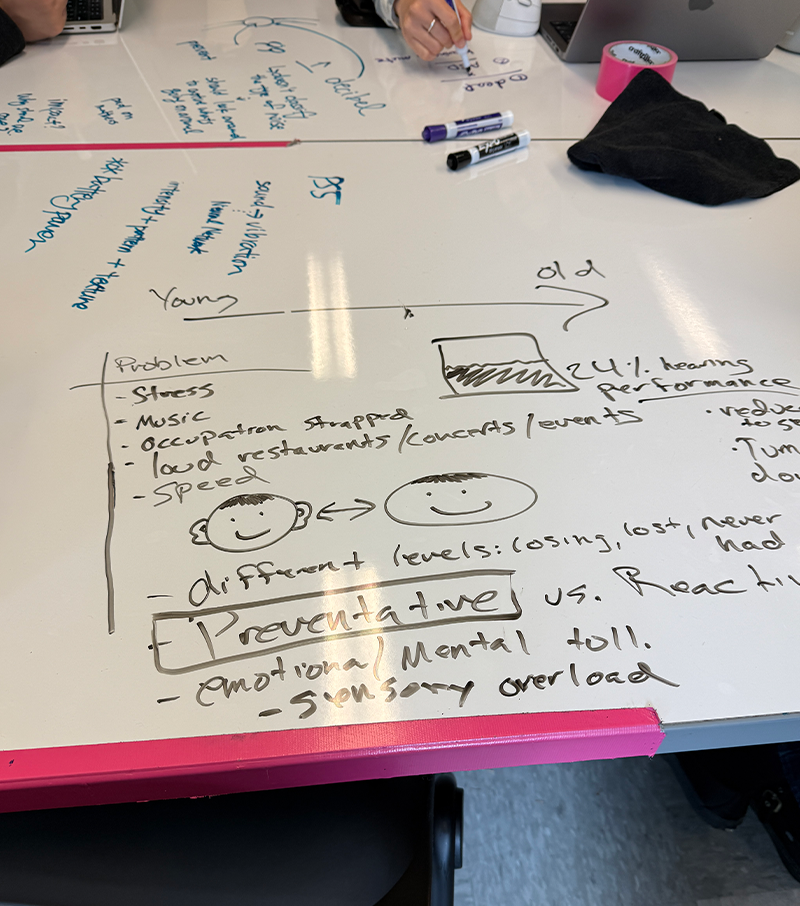
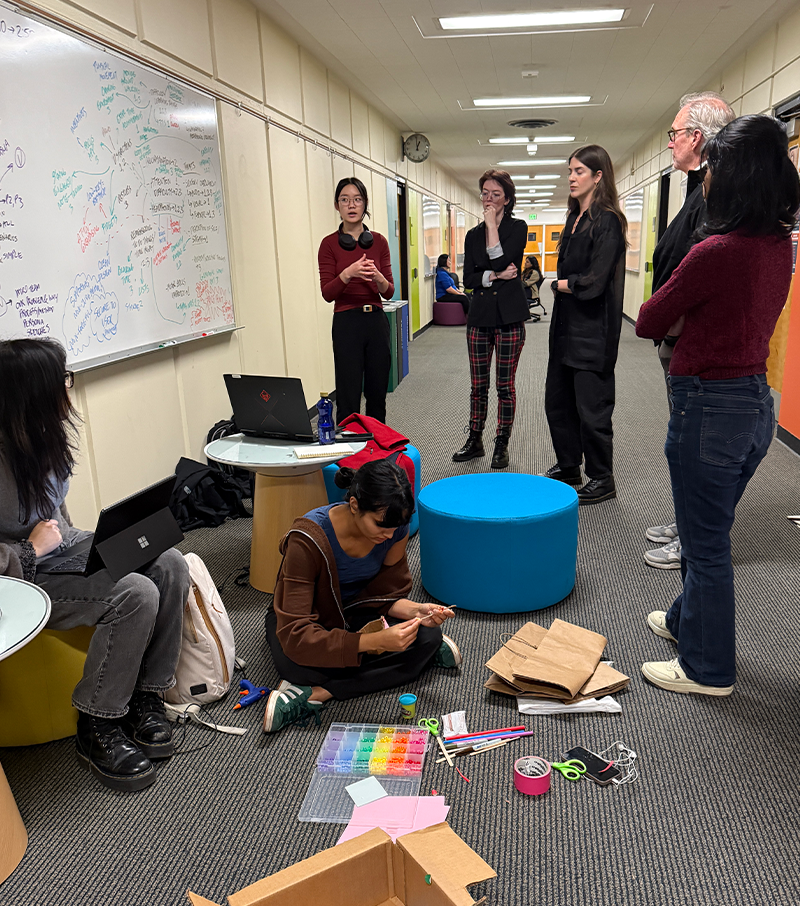
HCDE design jams are immersive, real-world learning experiences, and this year’s event followed a sprint-based format. Students formed 10 teams and spent the month of October conducting user research related to wearable accessibility. On the day of the design jam, teams used what they learned to move quickly from ideas to early prototypes, testing and refining their concepts as needed.
Throughout the day, industry advisors from Ipsos, Oura, Meta, Ralytics, and Microsoft’s Inclusive Tech Lab met with teams, offering feedback and helping students connect their ideas to real-world feasibility and impact. The result was a set of human-centered concepts addressing a wide range of accessibility needs, from neurodiversity to chronic illness to dementia care.
Final presentations brought all participants together as each team shared a core user insight, demonstrated their prototype, and outlined next steps if the project were to continue.
Projects included:
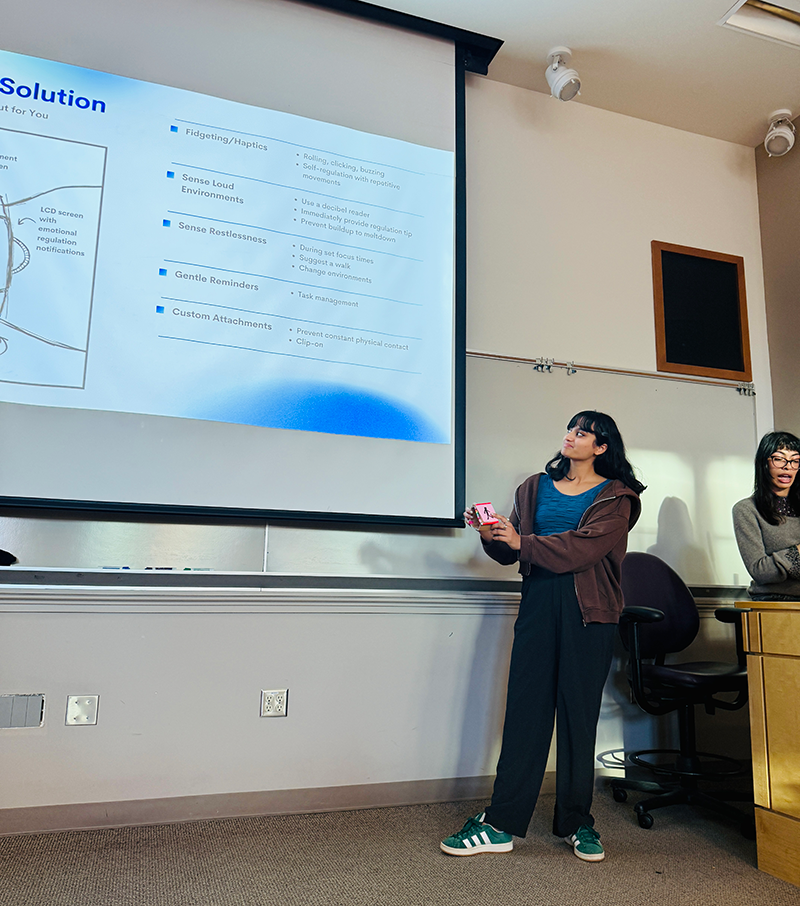
KindMind: A Watch That Watches Out for You
Created by Jordan Cheung, Apoorva Hurakadli, Alisha Bose, and Nupur Gorkar, KindMind is an adaptive smartwatch designed to support neurodivergent users through self-regulation, environmental awareness, and gentle task management. The concept combines subtle fidget and haptic elements, environmental noise sensing, and gentle task reminders to help users recognize and respond to overstimulation before it becomes overwhelming. Custom attachments and interchangeable bands offer flexibility for users who prefer limited skin contact, reinforcing the team’s focus on comfort, autonomy, and dignity.
GlucoPal: Accessible Diabetes Support for Low-Vision Users
Team GlucoPal—Viridiana de la O, Melanie Song, Earl Kim, Maggie Lu, and Keye Yu—focused on improving continuous glucose monitoring for people with diabetes and low vision. Their proposed companion app consolidates glucose tracking, diet management, and insulin logging into a single accessible platform. Features include customizable auditory alerts, Apple Watch integration, screen-reader support, and food tracking via a camera or smart glasses using OCR. A conversational assistant allows users to ask questions about trends and receive tailored insights, supporting independent and confident health management.
CAREGEAR: Reducing Cognitive Load for Alzheimer’s Caregivers
Alefiya Haveliwala, Arundhati Ramesh, Dishitaa Mahale, and Ranjitha Rangaswamy explored the challenges faced by caregivers of early- and mid-stage Alzheimer’s patients. Their concept proposes a matching wearable system: a secure smart earring for patients paired with a smartwatch or bracelet app for caregivers. Designed to be difficult to remove, the earring embeds sensors to monitor motion, temperature, and other signals, enabling continuous monitoring and emergency alerts. The solution centers both patient safety and caregiver well-being, addressing an often overlooked dimension of accessibility.
Beyond the prototypes themselves, the design jam offered students the opportunity to collaborate across disciplines, engage directly with industry experts, and practice human-centered design under real-world constraints.
HCDE thanks the 40 students who brought their creativity and energy to the event, the industry advisors who generously shared their expertise, and Ipsos for sponsoring the experience that prepares students to design more inclusive futures.