
Leah Pistorius
January 12, 2026
HCDE master’s student William (Wang Silang) earned two awards at the Stanford XR Immerse the Bay Hackathon for a project exploring how immersive and Tangible User Interface (TUI) technologies can help people engage meaningfully and respectfully with memories of deceased loved ones.
The 36-hour, on-site event at Stanford University is one of the largest XR hackathons in the world, bringing together more than 300 participants and over 60 teams to prototype next-generation mixed-reality experiences. William’s team received second place in the Best Integration of Haptics in VR track and an Honorable Mention in the Meta track for a prototype XR experience that allows users to interact with digital traces of a deceased loved one in a designed virtual environment via multimodal interaction like touch and voice.
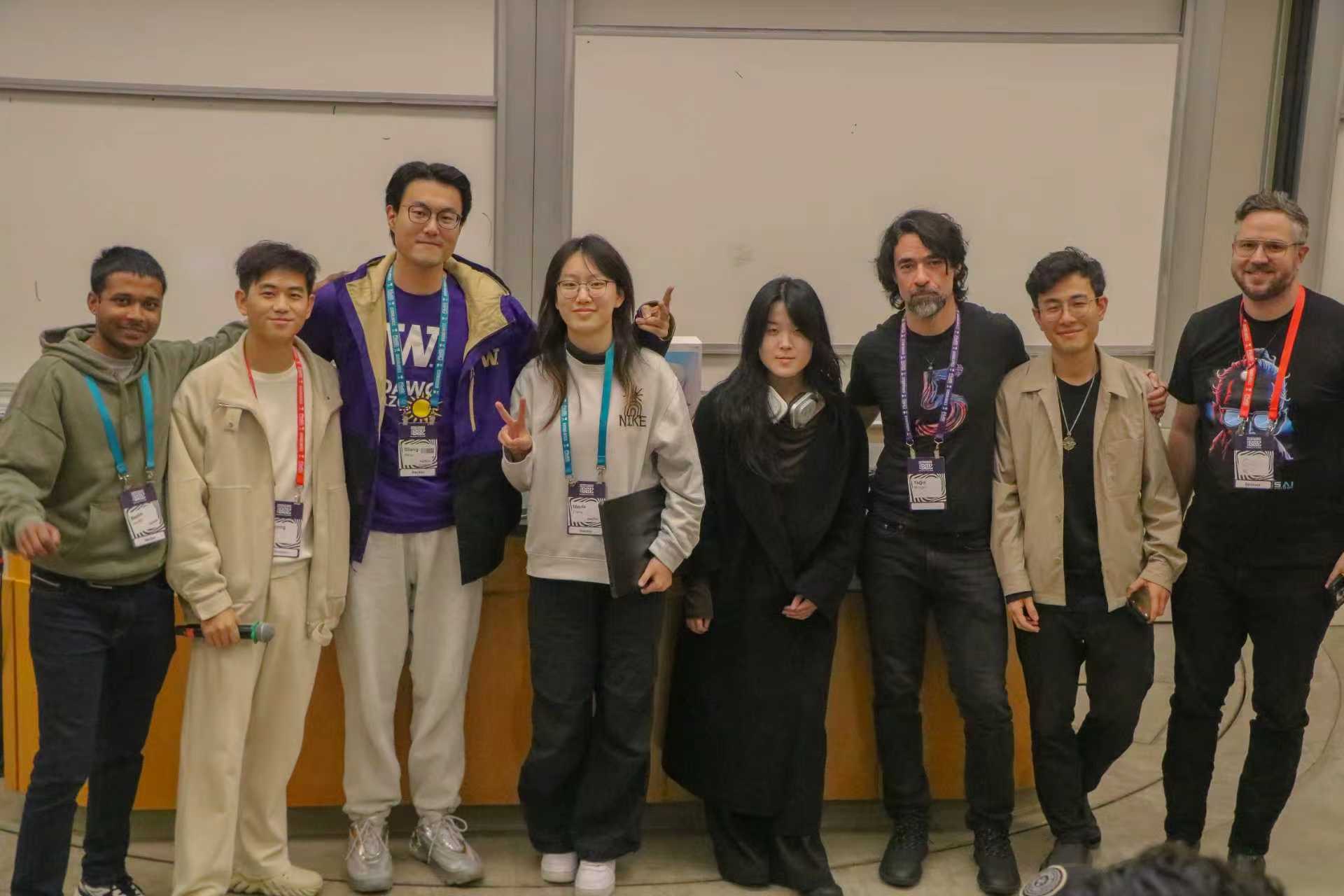
Student team members with hackathon sponsors from Meta.
From left, team members are Nasim Ahmed (first), William Wang (third), Mavis Zhang (fourth), Echo Zhou (fifth).
Designing with care in immersive spaces
The team was formed on-site and consisted of two undergraduate students with backgrounds in interaction design from the University of Washington and the University of Southern California, a PhD student specializing in AI and computer vision from Bangladesh, and William, an HCDE master’s student focused on HCI, XR, and AI.
Early on, the group aligned around a shared interest in human-centered, thanatosensitive design—design approaches that thoughtfully address experiences related to death, loss, and remembrance—and embodied interaction in XR. Their central question became: How might immersive technologies help people meaningfully engage with personal memories of deceased loved ones?
Instead of using AI as a functional assistant or a hyper-realistic replacement for a person, the team asked how XR and AI might support reflection, presence, and emotional sense-making through embodied interaction. Their prototype invites users into a designed virtual environment where they can “touch” digital traces of loved ones.
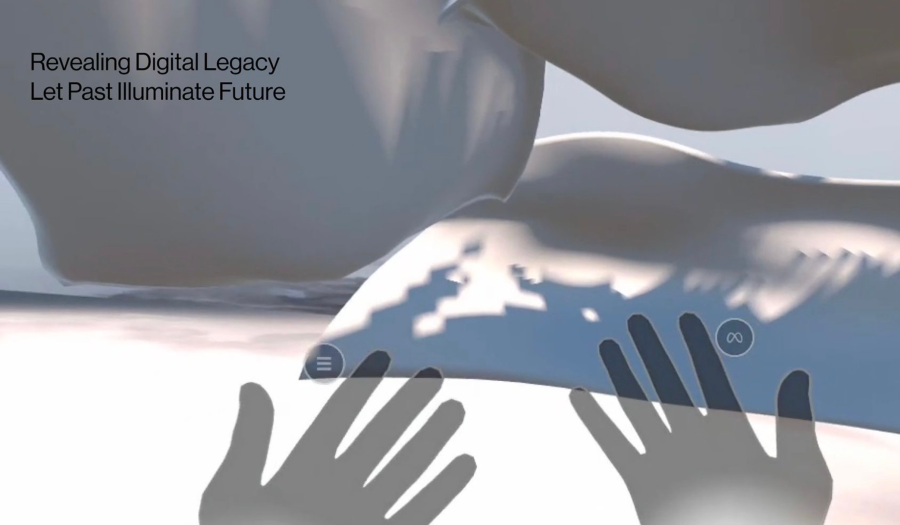
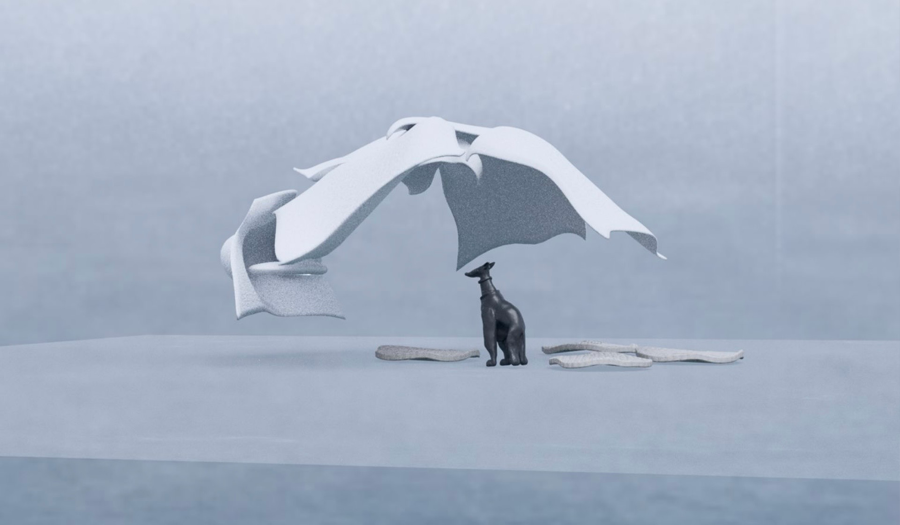
The prototype uses XR, AI and TUI to create an embodied experience that helps users engage with digital traces of deceased loved ones in a thoughtful, human-centered way.
Bringing HCDE thinking into a 36-hour sprint
For William, the experience helped solidify how HCDE concepts translate into fast-paced, interdisciplinary work.
“Rather than starting from what technology can do, I found myself repeatedly returning to HCDE questions, such as ‘What aspect of our humanity could technology help preserve and augment, not replace or dilute?’,” said William.
Several HCDE courses directly shaped his approach. In HCDE’s User-Centered Design course (HCDE 518), taught by Rebecca Destello, William and his teammates (Annie Huang, Silvia Mao, and Souen Choi) previously explored digital legacy, identifying unmet needs around how people manage and experience personal data of themselves and their deceased loved ones over time. While the hackathon project moved in a different direction, that foundation informed the team’s focus on multimodal interaction with digital traces in a custom-made 3D liminal space.
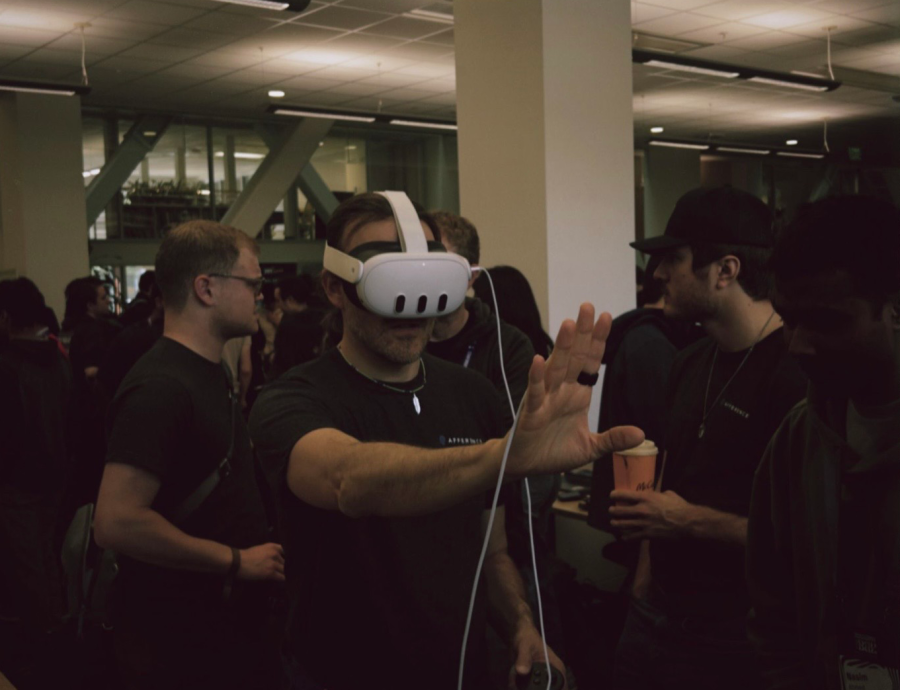
A hackathon sponsor tests the haptic-based prototype in VR.
Concepts from Theoretical Foundations of Human Centered Design & Engineering (HCDE 501) with Sayan Bhattacharjee also influenced William’s thinking. Theories such as distributed cognition echoed William’s previous reading and research around spatial cognition by Barbara Tversky, and reinforced the idea that the body is an active participant in meaning-making, an insight that shaped how the team thought about tangible, embodied interaction in VR. “The axiological design principles introduced early in the course, particularly the idea that technologies are value-laden, also gave me a strong sense of urgency to approach this topic with care, especially in light of the many poorly designed, hyper-realistic AI avatars of the deceased currently on the market,” said William.
William also credits his experience in a Directed Research Group led by Elin Björling with preparing him to collaborate across disciplines and levels of expertise, and the HCDE Research Speaker Series, organized by Julie Kientz, with broadening his exposure to emerging research areas. “The variety of ideas I encountered, from digital fabrication to human-centered AI, opened my mind to research topics like interactive digital legacy, which I hadn’t considered before coming to UW,” he says.
“More than anything, this hackathon clarified how effectively HCDE thinking translates into real-world, high-pressure, interdisciplinary settings,” he says. “It reinforced for me that human-centered values aren’t something you set aside when you move fast, they are what help you make responsible, meaningful design decisions.”