
It is important to consider implementing design grading systems that support the diverse needs and backgrounds of our students. Here are some key steps to consider:
Reflect on what grades mean to you and your students
What is your goal in assigning grades?
Grades might have a varied set of purposes to an instructor, such as assessing students’ relative grasp of course content, external motivators, a requirement of the University system, or something else. Consider what is your goal when assigning grades.
What relationship might your students have with grades?
HCDE has a wide range of students, each of whom might have different relationships with grades. As undergraduate sophomores and above, students might be used to strict grading rubrics, partial credit systems, and curves -- which might have prepared them to approach course assignments with the intention of getting a good grade, rather than demonstrating learning. You might also have athletes or scholarship students who are required to maintain certain grades for other reasons, as well as students from cultural backgrounds where certain grade floors are unacceptable to drop below. In master’s classes, you might have students less focused on grades, but also encounter students with equal (or perhaps more) expectations of getting high grades.
How might grading perpetuate inequity in the classroom?
Grading is increasingly being understood as a carceral practice -- encoding systems of surveillance, compliance, replicating social hierarchies, and internalized shaming. By assessing all students on the same equal rubric, what assumptions might you be making about their backgrounds? Consider reflecting on whether your rubric is equitable for your students, accounting for differences in their background knowledge, access to resources (both current and historical), language proficiency, and ways of demonstrating understanding of course material.
Ungrading as an inclusive grading practice
What is Ungrading?
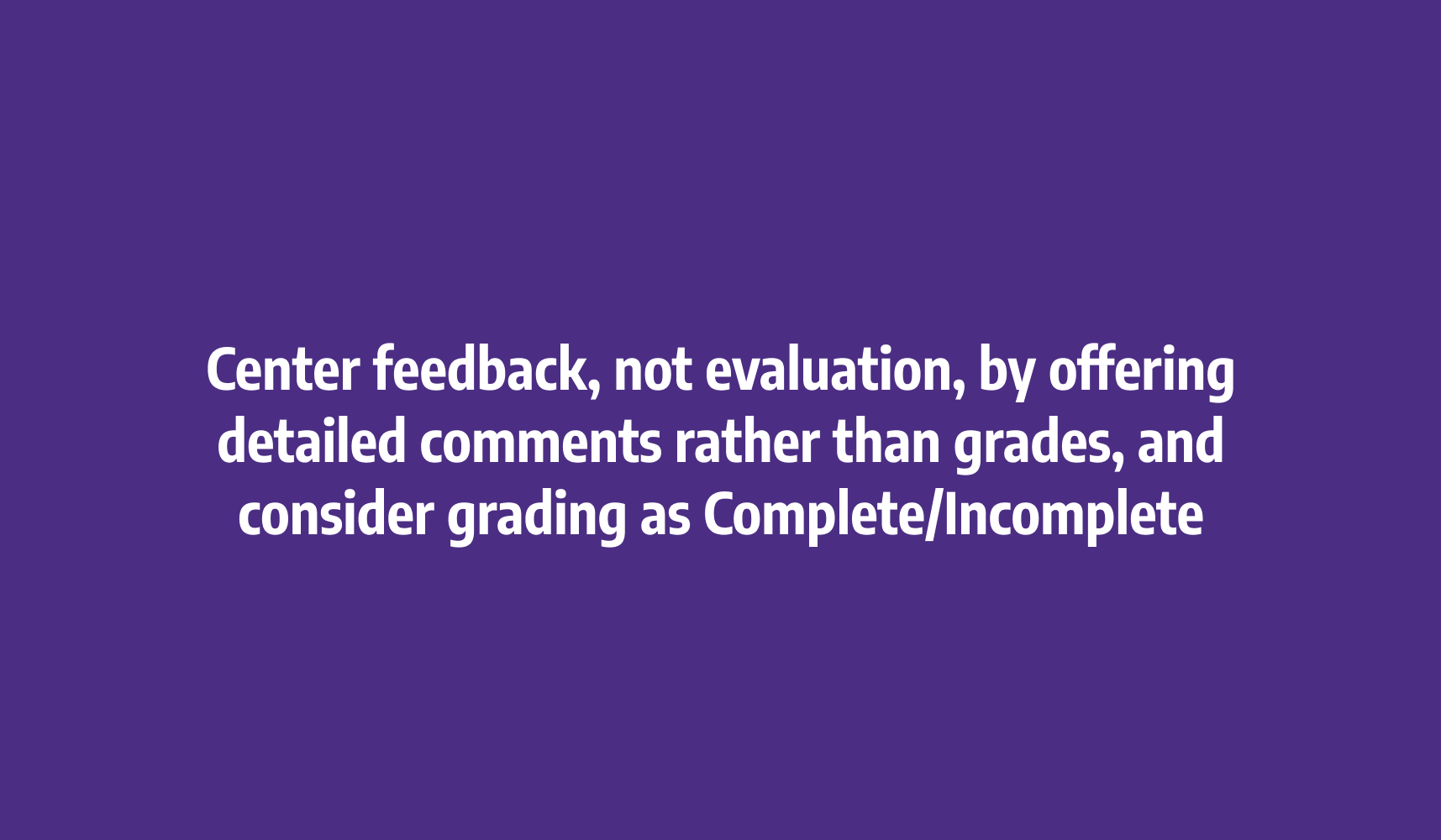
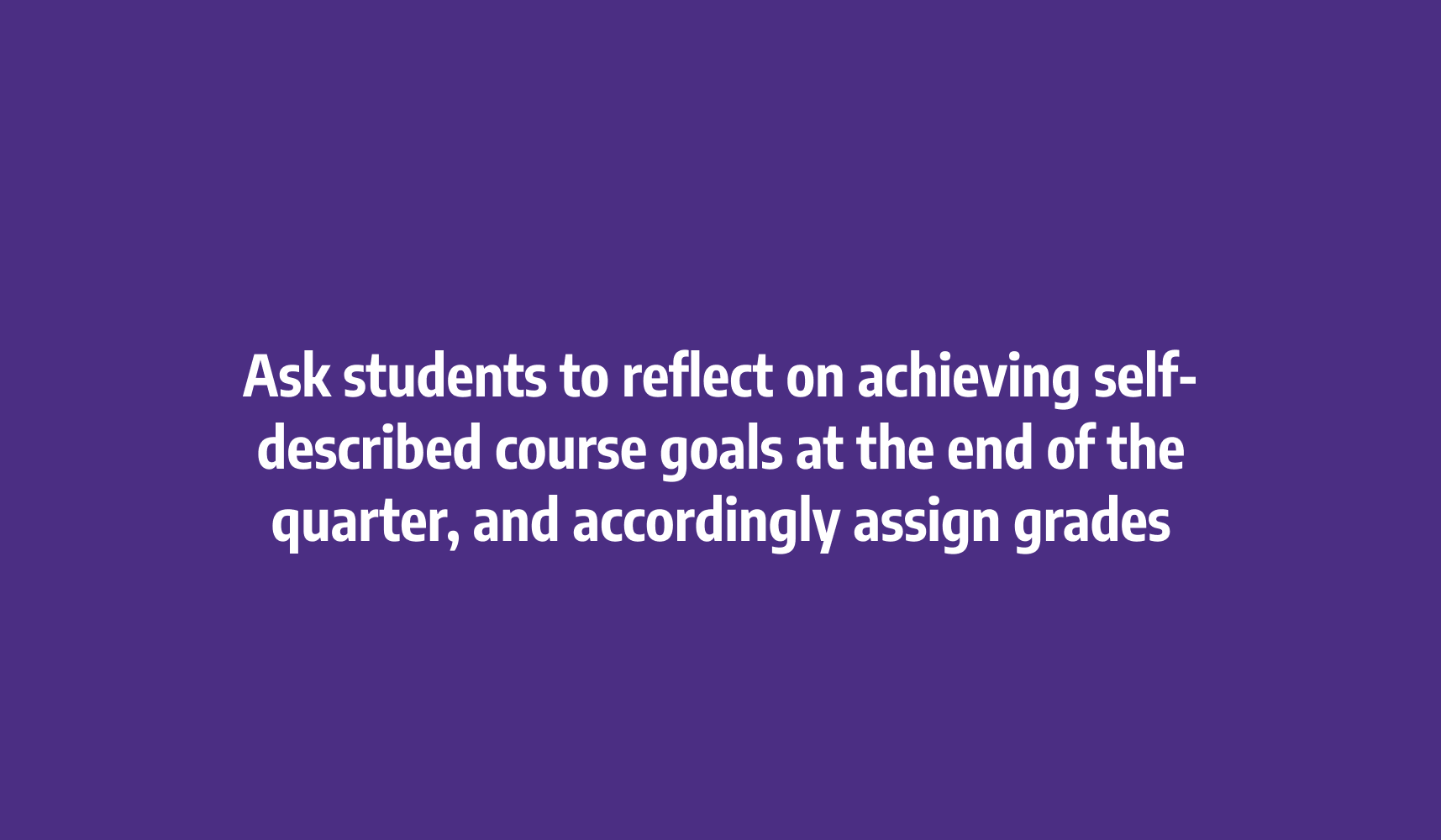
According to UW Psychology faculty Dr. Tabitha Kirkland, “Ungrading is a practice that minimizes or eliminates the use of points or grades in a course, focusing instead on feedback.” As a grading practice, Ungrading is intended to encourage students to focus on learning rather than simply demonstrating whether they get course concepts “right” or “wrong”, offering a more equitable grading practice based on individual reflections.
Has ungrading been practiced in HCDE?
Yes. Ungrading has been practiced in several HCDE courses, both at the BS and MS levels. Check out this research paper by HCDE faculty Dr. Sarah Coppola and Dr. Jennifer Turns on their experiences implementing Ungrading in a wide range of HCDE courses.
How does Ungrading work?
There are several different ways in which you can set up an Ungrading-based structure for your class. Here are some general principles you might follow:


Other inclusive grading practices
Contract grading
At the start of the quarter, lay out your course goals, and then break them down into a few levels that describes what you will consider to meet a certain grade’s worth of work. Describe what numeric grades are available to them, and what is the expectation for each level of grade. Then, over the course of the quarter, periodically inform students what grade they are on track for, and what grade is no longer achievable because certain criteria have not been met (and offer ways to make them up, if possible). For example, here is a contract used by UW Department of English part-time lecturer Emily George, adapted from former UW Rhetoric PhD student Jacki Fiscus.
Peer evaluation
Beyond instructor feedback and self-reflection, peer evaluation can be an effective opportunity for student growth, both by learning to give good feedback and gaining insights on how others in the class have approached the same course assignment. Aside from instructing students on good peer review practice (such as being constructive, detailed, and specific in feedback provided), you can ask students to assign a score for the assignment alongside an explanation. Ensure this is a fair reflection of submitted work, and overwrite any unfair assessments, while never revealing peer review scores to students.
Grading work, not timing of work
Recognizing that students may face unique challenges that can impact their academic lives, offer flexibility in deadlines and avoid penalizing late submissions with grade deductions, as such penalties can unfairly impact students and may not accurately reflect their knowledge or skills. Instead, establish transparent expectations and consider alternative consequences for late submissions.
Offering makeup work and manage zeros
Offer opportunities for students to makeup missed work through extra credit opportunities, and/or allow them to resubmit graded work edited based on feedback to gain points back. Additionally, set up assignment weights such as one Zero (either due to missed or poor-quality work) does not disproportionately impact a student’s overall grade.